Crystal: [00:00:00] I am Crystal DiMiceli, and welcome to the Forces for Nature Show. Do you find yourself overwhelmed with all the doom and gloom you hear of these days? Do you feel like you as just one person can’t really make a difference? Forces for nature cuts through that negativity. In each episode, I interview someone who is working to make the world more sustainable and humane.
Join me in learning from them and get empowered to take action so that you too can become a force for nature.
Hi, friends. I feel like it’s been such a long time since I last recorded. I hope you’ve enjoyed your spring and summer. Mine has been pretty good. During this time, my husband and I bought a [00:01:00] condo. We did some renovations, which turns out I learned. I actually do not like doing. I had always thought it would be fun, but not so much.
That has been a lesson that has been learned. After we did that, we returned to Italy for a cousin’s wedding, and then both sides of the family did a grand tour of Sicily’s highlights together. We’re finally now back in DC and I finally feel like we’re settling into life here, and I am so excited to get back behind this mic, and I’m even more excited for the season that I have planned.
After every interview I do and season that I finish, I think to myself, that was my favorite, but I think this season may be my most favorite of all. That’s because this one feels like I am going back to my roots. My lifelong passion has always been animals [00:02:00] from the first stray cat that I brought home when I was seven.
Her name was Lady to the wildlife I get so excited to see in my travels. I just have always had a soft spot for them, and this feeling has evolved into my baseline. Why for all that I do, which is to have a world where we can all thrive, both humans and animals together, and being around other people who feel the same is always so uplifting.
So that’s why when I was accepted into the Emerging Wildlife Conservation Leaders Program, otherwise known as EWCL back in 2010, it became such an important part of my life for for many, many reasons. But above all, what I love most about it is getting together with the other participants and just feeling so rejuvenated.
After spending time together, they fill my cup. And the program has been going for [00:03:00] 20 years strong as of this year, and I’m so lucky to be a part of the planning committee, putting together our 20th anniversary summit set to take place this December in celebration of all of EWCL’s achievements. I thought it would be a great opportunity to highlight some of the badass people that have come through this program this season leading up to the summit.
I have featured many of them before on the podcast, but this whole season will be featuring only EWCLers and all the wildlife that they’re protecting throughout the world. Now, it is a nearly impossible task to choose who to invite on because my goodness, everyone is so impressive. But I tried to look for new topics, new angles, new places that I haven’t already featured in the past.
I can’t wait for you to learn more about them too. So all that said, let’s move on to our first guest of the [00:04:00] season. Today I chatted with Dr. Hugo Pereira, a field veterinarian with a Mozambique Wildlife Alliance, an organization dedicated to protecting wildlife while strengthening the communities who live alongside it.
MWA tackles some of the toughest challenges in conservation from rescuing animals in crisis, to reducing human wildlife conflict to building community-led solutions that ensure both people and nature can thrive. On Forces for Nature, we’ve explored these issues before through the lenses of policy and science and community action.
For today, we’ll experience them through the eyes of the person who literally holds the heartbeat of conservation in his hands. As a field vet, Hugo is on the front lines, sedating elephants for collaring and treating pangolins rescued from trafficking and responding to emergency calls when animals and [00:05:00] people find themselves in dangerous conflict.
This conversation takes us into the mud, into the tension, and into the high stakes moments of wildlife rescue, while also showing us how a people first approach is at the heart of lasting solutions.
Hi Hugo. Thank you so much for joining me on Forces for Nature. It’s so great to have you. Hi
Hugo: Christol. Thank you for having me. Such an honor to be part of the show.
Crystal: Can you take us back to a rescue where you felt the clock ticking down? What pressures were you facing? What was going through your head?
Hugo: So recently, I think it was in May 20, 25, I had to go with my colleague William.
He’s another vet to rescue a rhino calf. It was a Saturday. I remember I was just planning to have a relaxed weekend because I had. A rough week, so I was feeling very, very [00:06:00] tired. Phone rang and the news were that a rhino calf of about four months was recently made an orphan due to a poaching incident.
So. When you hear something like that, all the feeling of being tired, like it just gets kicked off and adrenaline kicks in and your heart is sinking, you’re feeling for the calf and you just wanna go help. So I. Myself and him just prepared everything that we had quickly. We were able to coordinate with the team of the park that we had to go.
They had a helicopter waiting for us, and we rushed in there and we were able to go to the ground and we arrived there and there’s no sign of the calf, but the Rangers had seen him and we’re just. Just desperate to find this, this four month old calf and then the Rangers point [00:07:00] in the direction, like just, just fly that direction.
Like, but we can see and the, and it was still the end of wet season. The grass is tall, everything is very green, and it was in the afternoon, so there’s a lot of shade as well. But then we just see this tiny gray thing just moving. And we’re like, oh, okay, it’s here. Um, so I I, I, I prepared the dart. I, I dart the calf.
Everything goes well, calf goes down, but that’s just half of what I had to do. We still had to get this calf under anesthesia and hand it over to another team of vets that would take it to a rehab center. So.
Crystal: You can’t just easily pick up a rhino, even if it’s a baby.
Hugo: Well, no. We needed a team of 10 scouts and rangers to, to, yeah, 10.
They are very heavy at four months already. But everyone was just happy that we got to, like, we got their own time. But rhinos are very sensitive to [00:08:00] anesthesia, so it’s a delicate balance of keeping it immobilized for the trip, but not giving. Too much, uh, medicine so that it dies ’cause it’s like respiratory depression.
So you are your skills as a veterinarian. And I’m glad I had my colleague with me ’cause we would bounce, we were bouncing ideas just to see if we were happy with the anesthesia and how it was going. But yeah, we made it, we handed it over and now this rhino calf is in a sanctuary and we get pictures every now and then and we’re quite happy about it.
But it’s funny ’cause. One moment you’re in bed just feeling like you’re gonna have a relaxed weekend, and the other moment you’re just rushing to one of these crazy situations that we get into.
Crystal: Yeah, they don’t follow a schedule for sure. And this was the image of a. Or correct me if I’m wrong, the rhino calf was being transported by the helicopter.
Yeah. Like hanging from the helicopter, right? Yeah, [00:09:00] that’s,
Hugo: yeah, that’s, um, how does that work? Yeah, that’s one of the safest ways to actually get a rhino quickly from one point to another. You just like, you just hang them. By the feet. They’re sleeping and you just move them like that and you just have to be very careful.
Crystal: They’re transported through the air. Yeah, transport
Hugo: it through, through the air. Helicopters have to be like big machines that can carry a rhino. And that’s what we had in this, in this scenario. But it was a great. Story of how everyone just came together and planned everything and all the paperwork was done very quickly even though it was a Saturday.
And yeah, so, so it was, it was great to just see that these things can happen so quickly when everyone just knows that it’s an important animal that we need to to rescue.
Crystal: Mm-hmm. Have you followed up since.
Hugo: I haven’t followed up for two months now, but [00:10:00] last news I had was that it was actually doing great.
It was already playing with other rhinos in a like other orphans as well, because it’s a rhino orphanage, which is. Quite sad because it is very, very frequent that we find orphans in the wild due to the poaching crisis for Rhino horn. But at least we know of places that are doing amazing work for rehabilitating these animals.
Crystal: What got you into this work? What made you wanna become a field vet?
Hugo: Well, when I was growing up, I wanted to be one or out of three things. I would either want to. Own a, an Italian restaurant. ’cause that’s one of my favorite types of food. I wanted to be a pilot, a fixed wing pilot. Now I learned that helicopter pilots are cooler, sorry, fixed wing pilots.
And the, the, the third one was to, was always becoming a vet, but I thought that I would [00:11:00] be more of a clinical vet. My mom has also like dog and cat. Yeah, dog and cats, like small practice. My mom’s also has also a bad degree. She never practiced, so I, I even thought like, let me just live her dream by doing it myself, but.
I did a few internships in small practices, and I did not like being indoors, so I was like, no, this is not for me. And I’ve always liked nature, although I grew up in Maputo, which is a big city, lots of cars and buildings, not a lot of wildlife around, except for the occasional vervet monkey that appears in people’s yards.
It’s not very common to see wildlife in here, but I also grew up in a. At a point where you would get the big TV channels that would talk about nature and you get to see National Geographic and you get to see people like Steve Erwin doing his thing. You’re like, oh, that is a cool [00:12:00] job.
Crystal: Yeah.
Hugo: And then I met, like I, when after studying veterinary, I met three, well, at least I heard of.
Then Wildlife Vets Mozambique and Wildlife Vets. So like, oh, okay. So there are wildlife vets in Mozambique. So that’s another inspiration. And then just love for animals kept, kept calling me. To make long story short, I started working in Niassa Carnivore Program with Keith and Colleen and the rest of the team of Christina and Andrew and Thomas.
It is a program dedicated to community based conservation, and that’s the first time I actually had a. Real conservation job and a people approach conservation organization and that’s, I think that was when I discovered my calling, like, I really like helping people. Although I’m a vet, I think that people are a big part of what conservation can be.
Crystal: I’m really interested in diving [00:13:00] deeper into those people first stories and learning more about that, but. Just going back to the clinical work that you had done, you often work now without a fully equipped clinic nearby. You’re, you’re out in the, in the wild. How do you adapt when you don’t have the tools that you need?
Hugo: So we try to make our kits as fuller as possible. So we, we have these backpacks full of. Syringes and catheters and needles. Antibiotics, all the drugs that we need, serum bottles, like, uh, everything that we can, but sometimes you also have to develop simple tools like a pole made of steel because you need to thread a color under an elephant’s neck.
If you don’t have that, you just look around and find. The tree with the longer stick and you try to cut that. So having [00:14:00] a pocket knife and having a multi-tool also helps a lot. Sometimes you use your shoe laces to hang the serum bottles because there’s no one to hang it for you. Shoe laces have been used for many, many things, like to, on collaring, for example.
You just. Thread it to the holes and tie it to the branch that you made and you pull it with that. It’s a lot of adapting. And, and yeah, we, we get really creative when we, when we, when we do our work. But I would say that for anyone that is going to work in the field, having a pocket knife and a multi-tool will make a huge difference.
’cause it helps out a lot.
Crystal: Yeah. And my husband, who does a lot of work in deep in the jungles of Panama, he often says that if he can only have one thing, it would be duct tape. Oh. Like he could survive two weeks with just duct tape. Yeah, duct tape.
Hugo: That’s, that’s the kid for sure. Like duct tape helps with and everything.
So everything. [00:15:00] A good knife or a multi-tool and duct tape. That’s your survival kit.
Crystal: Yeah. Do wild animals ever seem to understand that you’re trying to help them?
Hugo: Well, the optimist and dreamer in me likes to believe so, but I also think Me too. Yeah. Yeah. But I also think it depends on the species.
Elephants are the more, the most perceptive, I think. They first panic a bit. They don’t like the presence of humans. They don’t know if you’re there to harm them. I sometimes think that they think that you are the reason why they are in that situation. For example, when we had a mother end called stuck in the mud, we had to dart the mother because we would not be able to go and put the ropes around her and pull her out with a tractor.
The calf was stressing and tried to, to push them away from the, the mom just trying to protect the mother and then
Crystal: Oh, but you didn’t, you didn’t dart the baby? No, no, we did
Hugo: not [00:16:00] dart the baby. It was small. No need. We were just. Having it around us, and it would try to get under the mother just to, to run away from us.
And it was like heartbreaking. But then we would just gently, but they were stuck. They were stuck in the mud. In the mud. They were
Crystal: unable to get out.
Hugo: The, the, the calf was able to move more. He was way lighter. I know it. Might be difficult to imagine a light elephant, but he, he was light enough to not sink in the mud, but the, the mother was like waist down and couldn’t move the legs properly.
So we had to immobilize the mom. We did that, my colleague and we were, and he was taking care of anesthesia and. Me and the rest of the team from the park that called us to help, we’re doing the ropes around the mom and pulled her out of the mud and the calf, then relaxed and was like walking with us.
And actually there’s a, there’s a, a video of us rescuing these mother and baby and it’s like still screaming at us, but very happy that the mom is getting unstuck. [00:17:00] And I do have a picture with the baby calf just. It’s close to me and I’m covered in in mud, and we’re all just very happy that it all went well.
But there are other animals that they just don’t care. Like I. A huge respect for lions and leopards. When they are in trouble, they don’t care who’s coming. And if it’s help that’s coming, you just hear the grow and you feel it in your chest. And yeah, your, your first instinct is to just, it’s to just, you either freeze or you wanna run away, but then you have to fight that feeling and you have to be like.
Crazy to do the things that we do. ’cause normal people would be like, Nope, I’m, I’m good. I’ll, I’ll get to live another day. And, and that is, and that is it. But, but yeah. Um, I think it really depends on, on the species.
Crystal: I mean, animals being stuck in mud seems to be something that I hear about more [00:18:00] and more, I guess maybe because of droughts or whatnot.
But it’s so sad to think that they’re just trying to find water and then they get stuck. End up passing away because they can’t get out. So you guys literally save their lives. Yeah.
Hugo: Yeah. It’s, uh, yeah, it’s one of those things that happen in nature. It seems like everything’s okay. They’re just going to drink a bit, but between the dry and the water, there’s like mud and they can, and they get stuck.
But yeah, it’s, it’s always. It’s always a great feeling when you are able to reach these animals just as they are still alive enough and with strength enough to actually survive this episode and get help, and they just, you just reversed that anesthesia in there. Okay? And actually some rangers of one of the parks here from Magwood Park, we couldn’t get to an elephant on time.
So what they did was actually pour more water into the mud so it became looser and the elephant was able [00:19:00] to actually get freed by himself because they were, were just like, no, let’s just dump more water and make this like a, a pool basically. And, and like that the elephant just came out and just do there and went his way.
I, I like to believe that he nodded and was like, thank you. But I don’t think it happened quite like that, but that’s, that’s how I imagined he felt.
Crystal: I agree. I’m gonna go with your thoughts with that. What does a typical day look like for a wildlife field vet? Like today? It looks like you’re home. I am. And, but on the days of the week, other than, you know, those emergency situations, what does your day look like?
Hugo: So yeah, a, a normal day, if I don’t have a specific operation in the field, I go to the office. In the office. That’s where we meet as a team. That’s where we find out what every department of the organization is doing. We bounce off ideas, [00:20:00] we talk to our partners. We basically start creating. The foundation for the work that we have to do on the field.
Take care of our equipment, clean our dark guns, clean our vehicles maintenance, write the reports. Everybody has to write reports
Crystal: and you can’t get away from it. You cannot get
Hugo: away from from reports. But yeah, it involves a lot of planning. I would say that it’s 90% planning and then 10% is the work that you do on the field.
So I, I, I sometimes say like, we drive like five hours. To get to an animal and spend like 20 minutes with them and then drive another five hours back to, to where we live. Um, uh, but
Crystal: do you get a lot of calls for animals? We
Hugo: do. We do. It depends on what we have to do. We try to plan a lot of our interventions, but we always have emergencies.
Last week we had to do two snare removals on elephants. So, yeah, they were outside the protected [00:21:00] area, so people were just saying, well, there’s like this elephant that doesn’t leave this area. Can you just go? Check what’s wrong, and, and our team was able to find two elephants that had cable snares on them, and we were able to remove them.
But yeah, we, we also get calls from opportunistic work such as carnivore collaring, like hyenas sometimes, like yesterday I came from, from a park where I was putting a collar on a hyena because they just. Decided to reveal themselves and none of them had a collar, a tracking collar. And it’s important work to be able to monitor how they’re doing in the park.
So the team from the park calls and you just go there and spend a few hours with them trying to find the opportunity to put a collar on. But yeah, it’s a lot of planning, a lot of traveling, a lot of reporting, and it, it is. A profession that is divided by office work and field work, and part of office work is [00:22:00] getting ready to be on the field.
Crystal: Let’s now pivot to the human side of conservation. Previously, outside of this conversation, you had sold me that your whole career in conservation has had a people first approach. Can you unpack what that means in practice?
Hugo: So to give you a bit of context, Mozambique has 25% of its territory as protected areas.
To give you a number, it’s almost 50 million acres of. Protected areas. So it’s a massive territory just dedicated to protected areas, and the majority of them don’t have fences and can have communities living inside them. And it’s been like that for many generations. So this means that wildlife and people are in constant contacts.
They interact a lot. These are rural communities and they still need to use the land and make a living out of it. [00:23:00] And. Part of this interaction can be human wildlife conflict and the organization, my organization, uh, Mozambique Wildlife Alliance, focuses on training these communities, local authorities, rangers, to be able to use animal deterrents, especially for elephants ’cause those are the ones that people complain the most about ’cause they are.
And they can actually create, well, they can actually cause a lot of the destruction. So it’s us going to these communities who. Are living in, in these remote areas who have these animals coming to, basically their fridges, kind of, their farms are like their fridge, it’s their food. And we just gave them some of the, some of the tools that they can use to push these elephants away.
So that the impact that they might cause on their yield is lessened?
Crystal: Yeah. I mean, people here [00:24:00] complain about deer getting into their gardens or whatnot, which are much smaller than elephants. And unless you’re in a rural area, it’s not your refrigerator per se. It’s not your only source of food. But people still get.
You know, upset about it. And so I can only imagine what it would be like with a larger animal and your source of food. So how do you gain the trust of individuals and communities? I think it’s
Hugo: easier for our organization because we care. We care about these people. We understand. We understand how frustrating it can be to have your.
Your years yield, your, your harvest for that season being destroyed in an evening. Like we’re talking about two hecs that I, I, I don’t know how, what, what that’s in like to the us I’m not sure either. I don’t necessarily know what that is, but it’s like, like one football [00:25:00] field that can be used by like two or three families and in one evening, a group, a group of.
10 elephants come and destroy it. And that is very frustrating. It’s very saddening. It’s people that are living with a lot of food stress. So basically we go, we listen, we give them a face to complain to, like they can direct their anger, their frustration at us. And we are there and we listen. And after that, after the event.
That’s when we start working together to try to find solutions. So actually being there for them and having this continuous contact with them is how you gain trust and you have to show up. You don’t do it. Once off, you start showing up so that they can see that it’s not the, these people didn’t come here [00:26:00] just once, and then they’re gonna leave.
And that we, we, we show up and,
Crystal: and
Hugo: little by little, that’s how you start building the trust.
Crystal: Can you give me an example?
Hugo: One of our most recent projects focuses on protected farming communities, which are communities that are in human wildlife conflict hotspots, and we work with groups of farmers that will grow their crops in blocks of 50 to 80 acres, and that’s like 20 to 30 families.
Uh, we put an electric France in this area. So that elephant incursions are less frequent and then they’re able to grow their crops and have a better harvest. So from there, more initiatives can be implemented in the same communities. You start bringing other organizations that focus on community development.
You have people in the community starting to have their own ideas, starting to be able to dream [00:27:00] again and plan. Because planning is not something that happens in rural communities. They live by day by day. But then if you see that your, your year, actually you did not have any loss. So you’re gonna get a lot of food and you can actually sell.
Access and then you’ll get money. And what are, what are you going to do with that money? So you start creating, like you start promoting opportunity basically. And then little by little, with all these initiatives coming together, people start realizing that they wouldn’t have these opportunities if wildlife was not in their areas.
So you then start shifting the conflict to tolerance. And the more positive change happens, you then create a space for coexistence, which is the ultimate goal, but it’s the hardest one to achieve. But it’s being persistent and seeing what works and what doesn’t to, to create this, this [00:28:00] change in people, and again, showing up and being there and battling with them.
Crystal: That makes total sense. You have to establish tolerance before you can get anywhere near coexistence. And, and this actually makes me think of your EWCL class. You’re all focusing on lion conservation in one way or another. And I remember one of the teams is doing something like gathering the names of different organizations and groups who work on human wildlife conflict and essentially creating a contact list for them to share ideas and strategies and and whatnot.
Do you have contact with other organizations and are able to learn from one another?
Hugo: Yeah, we, we do work with a lot of organizations in Mozambique and in the region. Just recently we were in a workshop that was just discu, uh, discussing human wildlife coexistence. [00:29:00] So they’re full focusing, not on conflict coexistence, but fo focusing now on coexistence.
So which initiatives we can all start implementing that are working in some of the areas and what can we. Take outta positive. And from their experience, experiences and implementing Mozambique as well.
Crystal: Is there a difference between the, I guess focusing on conflict versus focusing on coexistence, or is it just a, a label change?
Um,
Hugo: If you focus on conflict, you’re focusing on, on the problem. Coexistence is focusing on the opportunities that this conflict brings. Yes. So it’s making great, like a positive change and it becomes a, a separate thing. It’s still human wildlife, but you’re not only focusing on solving conflicts, you’re actually.
Working on finding how conflict can be used for change in these communities that have to deal with wildlife. So, so, so, yeah. That’s so good. We do [00:30:00] work and yes, one of our groups in Class 10 best class ever is, is working on a database that actually gathers information about predator conflicts, more specifically Lions.
Crystal: Yeah. So cool. But getting back to your work specifically, how does helping individual animals help inform broader conservation strategies?
Hugo: Mozambique Wildlife Alliance is in a key position to perform trial and error, and we provide a lot of feedback to other colleagues that are working on the same field, and we share the results and what we ha were able to achieve what went wrong.
And this constant communication allow us to develop initiatives together. We map corridors, we’d identify conflict hot spots. We do our interventions in key species, such as rhinos, when we have to dehorn them, and it’s constant communication like we remove the horn so that the [00:31:00] species survives. We hate to do that, but it’s one of the strategies that has been able to reduce a lot of poaching.
Why do you hate to
Crystal: do
Hugo: that? It’s one of those things where rhinos. Exist in the nature with a horn and they’re iconic because of the horn. And they’re beautiful with the horn. Yeah. Um, and they actually use it to defend their territories. And um, yeah, that’s what I was getting at. Yeah. So it’s useful for them.
And also every individual that you put under anesthesia is at risk of actually dying from that intervention. So it’s one of those tough things that we know we have to do because at least in anesthesia, we are all there in a control situation where we can start reverting the process if we see that the animal might not be able to survive it.
And if you put it in a balanced. And compared to a poaching incident that you know that the animal is not gonna survive, I would still choose to dehorn them. [00:32:00] ’cause maybe that way we’re able to allow whom, whomever has to deal with the poaching crisis. Well, we buy them time so that they can actually.
Develop the right strategies to hopefully one day be able to reduce this need for a rhino horn, and then we will get to have rhinos with horn again, which is great. And removing the horn is something that, well, it’s, it’s a. It’s not a painful procedure. It’s like cutting your nails or your hair because it’s made of keratin.
Mm-hmm. And the horns grow back. So one day we will Oh, they do? Yeah, they do, they do grow, grow back. Like after, I didn’t know that. Two to three years you have to trim them again if it’s still in a poaching hotspot. But yeah, they, they rego their. Their horns, like our nails, we cut them and they grow back and cut them again and they grow back.
Being in this position, we we’re able to create a network of like-minded people working for the same cause.
Crystal: Even if [00:33:00] the listener is not dealing with rhinos or alliance, what lessons from your work apply to the challenges anyone might face with local wildlife like the deer that I mentioned or coyotes in, in cities?
Hugo: People can get information about the local organizations or initiative initiatives that occur in their area. I think getting educated about the why managing wildlife is important. Well, as humans, we are privileged to have the skill of rationality so we can understand the why, the who, the what if. And by that I’m saying is like trying to understand who are the organizations, why they do their work and what happens if they don’t.
If you get. Informed on that. You might be able to understand, even if you don’t like coyotes very much, but there’s an organization that is protecting coyotes in your area. Just trying to understand why they do it will help you make better [00:34:00] decisions into why you hate them and how you can actually start going through what I mentioned before, tolerance, and what can you do to prevent the conflict from.
Happening with coyotes or with deer, maybe it’s creating a, a, a different type of fence so that deers don’t come into your, your garden. Maybe it’s, uh, finding out what time of the day they actually prefer to be in people’s gardens and use the deterrents for, for, for the species like flashlights and noises and all of that.
scarecrows, I dunno. But yeah, getting, getting a bit of information about what’s happening and why these animals aren’t. Our local areas is, I would say, step one.
Crystal: Yeah. And I, I like what you said, what would happen if those organizations or those efforts were not being put in place? Yeah, definitely. What, what are the consequences that we’re not aware of and, and considering, yeah.
What’s one simple action someone [00:35:00] could take today to help wildlife and people coexist better if that answer is different than what you may have already.
Hugo: It. It is. Well, you can also try to find out if you have a local zoo that supports conservation initiatives about a species that you care about, you can offer them.
Their supports. You can go to their shops and see if they sell products from that came from communities that live with wildlife that you care about. You can donate to organizations and projects that focus on community-based conservation or all these other projects that are working to protect the species that you care about and.
Yeah, social media is a, is a, is a big weapon now. It’s a, it’s a big source of spreading messages. It’s a big source of trying to find the right information. And [00:36:00] I will emphasize on right information because it can be, uh, it can be, it can go both ways. You’ll
Crystal: find the incorrect information as well. Um,
Hugo: if you care about a project and they have.
Social media and they have a blog or a YouTube channel, you can share these things, share these stories, show your support in spreading the message, because everyone knows someone that knows someone that knows someone, and that someone that they know can actually help these projects that you, that you start growing attached to.
So yeah, I think that’s, that’s something that we can do today.
Crystal: Thank you. Looking back at your work. What’s one moment that gives you the most hope?
Hugo: Oh, just recently we had one of our protected farming communities saying that they did not have elephant incursions in their fields [00:37:00] for the last two years.
And. Being there and seeing that their crops are like just blooming and being able to buy them at a very cheap price. ’cause you get discount because you, you were able to help them out. And you just see the smiles on people and they’re saying like, ah, no. Now we can actually just admire elephants and not be afraid that they are going to come to our.
Our fields and I have to give a lot of props to our human wildlife conflict team ’cause they do an amazing work. Yeah. Whenever you start seeing these small changes in people’s perspective towards wildlife, when you start seeing that people that didn’t care about nature, start caring about them, when you have the opportunity to have.
Students from local schools going and [00:38:00] joining, for example, an elephant collaring and saying that when they grow up they wanna do the same as you. That’s basically very empowering in a way, ’cause you know that you’re inspiring people and seeing how, how much our team is growing with the right people to do the, the mission that we have chosen for us.
That keeps me motivated and looking back at all the decisions that I’ve made in the past and looking at where I am now, it’s, it’s good to see that I, that I made a lot of good decisions.
Crystal: Last question, what message would you share with somebody listening today? Perhaps a young vet or a community member or just an individual moved by conservation that helps them believe in their own capacity to make a real difference.
Hugo: As most conservationists [00:39:00] would say, conservation is one of those areas where we rely a lot on each other and we know that it’s not one person that can make the whole change, but. Having multiple people interested in making the change is what actually creates the, the positive ripple effect.
Crystal: Hugo, you’re doing such exciting work and, and before we started recording, I.
Had told you that and, and this for the listener, go to their website because they have this amazing video that you’re gonna watch and you’re going to, like, I’ve gotten goosebumps from it. And you’re just gonna feel like, yes. Like, let’s go be the change. Let’s go make this happen. It’s gonna totally motivate you and, and check out all the other work that, that your organization is doing.
Hugo, thank you for all that you’re doing. You are making a [00:40:00] difference.
Hugo: Thank you for having me. And yeah, it’s, it’s just a huge honor to be able to share a bit of my thoughts and my story and what inspires me. And I hope that I inspired a lot of people today, but even if it’s just one person, it’s just another fighter for the cause of conservation.
So I’m happy about it already. Yeah.
Crystal: Yeah.
What an incredible view into the world of wildlife medicine. Often what we see on social media or on TV are the big flashy rescues, but there’s so much more that goes into being able to pull these off that isn’t as exciting, but just as if not more. Important. You have to prepare your toolkits and make plans and build partnerships and develop trust.
What struck me most was Hugo’s reminder that conservation is never [00:41:00] just about the animals, it’s about people, their livelihoods, their safety, and their voices. By showing up, listening and building trust, Hugo and the Mozambique Wildlife Alliance are creating space for coexistence step by step. And while most of us won’t ever dart an elephant or rehabilitate a pangolin, we all face our own versions of human wildlife conflict, whether it’s the deer in the garden or coyotes in the neighborhood, or just the daily choices we make about how to share this planet.
Hugo shows us that the same principles apply everywhere, compassion, persistence, and community. If today’s episode moved you, I encourage you to visit the Mozambique Wildlife Alliance website, share their stories, and support their work. And wherever you are, look around, find your local wildlife organizations, [00:42:00] learn their challenges, and ask how you can help.
Because as Hugo said it, it only takes one person to make a ripple. Maybe that person is you. Don’t forget to go to forces for nature.com and sign up to receive emailed show notes, action tips, and a free checklist to help you start taking practical actions today. Do you know someone else who would enjoy this episode?
I would be so grateful if you would share it with them. Hit me up on Instagram and Facebook at becoming Forces for Nature, and let me know what actions you have been taking. Adopting just one habit could be a game changer because imagine if a million people also adopted that. What difference for the world are you going to make today?
This season of Forces for Nature is extra special- all of the guests are participants in the Emerging Wildlife Conservation Leaders (EWCL) program, a global network of conservationists who are pushing the boundaries of how people and wildlife can thrive together. As EWCL celebrates its 20th anniversary this year, I’m spotlighting some of the inspiring individuals whose work is shaping the future of conservation.
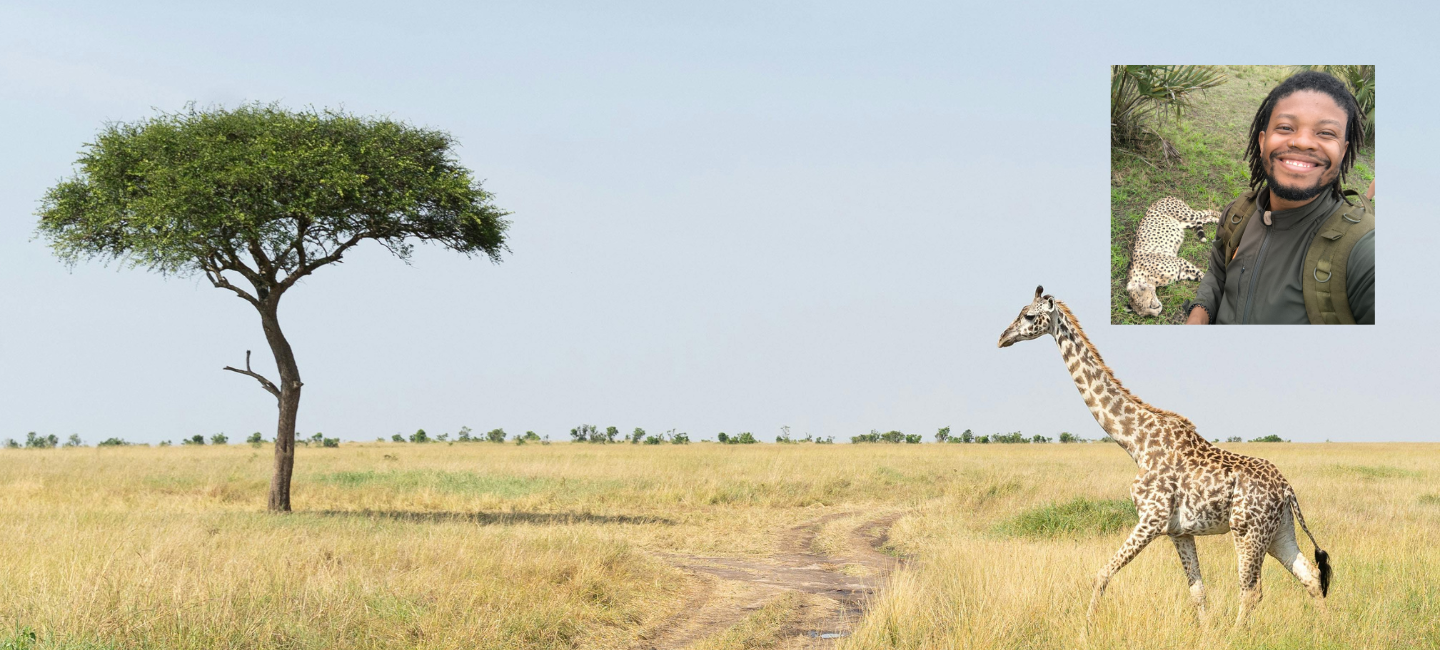
To kick things off, I sat down with Dr. Hugo Pereira, a field veterinarian with the Mozambique Wildlife Alliance. Hugo’s job might sound like it’s all about the animals- from darting elephants, to rescuing orphaned rhinos, and rehabilitating pangolins- but as he makes clear, conservation is just as much about people. In Mozambique, communities and wildlife share the same land, which means Hugo’s work often starts with listening to frustrations, building trust, and co-creating solutions that reduce conflict and create opportunity. And while you may never lift a rhino calf into a helicopter or pull an elephant out of the mud, you probably do encounter your own version of human–wildlife conflict whether it’s deer eating your garden, coyotes prowling your neighborhood, or simply the daily choices of how your community shares space with nature. Hugo’s “people-first” approach shows us that coexistence starts with compassion, creativity, and persistence and the principles he lives by in the savannas of Mozambique are the same ones that can guide us in our own backyards.
Highlights
- The adrenaline and precision behind rescuing a four-month-old rhino calf orphaned by poachers and why veterinary teamwork made the difference.
- How Hugo and the Mozambique Wildlife Alliance adapt with creativity in the field, using everything from shoe laces to duct tape to save animals in crisis.
- Why a “people-first” approach is essential for reducing human-wildlife conflict and creating space for coexistence.
- Practical lessons anyone can apply at home to reduce human-wildlife conflict and support this kind of work.
What YOU Can Do
- Donate to organizations and projects that focus on community-based conservation and coexistence.
- Volunteer your skills to support local zoos or conservation institutions.
- Buy products that support livelihoods.
- Share conservation stories on social media. Spreading the right information helps raise awareness and attract wider support. “Everyone knows someone that knows someone,” Hugo said. One share can ripple outward.
- Educate yourself about organizations in your own area: Who they are, why they do what they do, and what would happen if they didn’t exist. This awareness builds empathy and informed support.
- Get informed about local wildlife and why they’re present. Understanding why deer, coyotes, or other species show up in neighborhoods helps people move from frustration to tolerance.
- Modify your environment to prevent conflict:
- Build or adjust fences to keep animals out of gardens or crops.
- Use deterrents like flashlights, noises, or scarecrows, depending on the species.
- Build or adjust fences to keep animals out of gardens or crops.
- Recognize “tolerance” as an important step: we don’t have to love the wildlife around us, but learning to tolerate them is the bridge toward coexistence.
Resources
If you enjoyed this episode, be sure to subscribe, rate and review it on your favorite podcasting app! This helps to boost its visibility.
Hit me up on Instagram and Facebook and let me know what actions you have been taking. Adopting just one habit can be a game-changer because imagine if a billion people also adopted that!
Never miss another episode! Sign up to receive email updates!
What difference for the world are you going to make today?
WANT TO ALSO BE A FORCE FOR NATURE?
Sign up below for a fantastic (and free!) guide to help you start taking practical actions today! Plus, you’ll be subscribed to receive the newsletter with podcast show notes and even more action tips.