
Hi, friends. As this season starts to wind down, I’m already dreaming up conversations for next season. If you’re part of a wildlife, environmental, or conservation organization and you’d like to reach curious, action-oriented listeners, I’d love to partner with you. You can sponsor a full season or a single episode. Want to explore the possibilities? Reach out – you’ll find my contact info in the show notes.
I am Crystal DiMiceli and welcome to the Forces for Nature Show. Do you find yourself overwhelmed with all the doom and gloom you hear of these days? Do you feel like you as just one [00:00:45] person, can’t really make a difference? Forces for nature cuts through that negativity. In each episode, I interview someone who is working to make the world more sustainable and humane. Join me in learning from them and get empowered to take action so that you too can become a force for nature.
This episode is a little different—and very special.
As you know, this whole season of Forces for Nature has featured alumni from the Emerging Wildlife Conservation Leaders program in the lead up to its 20th Anniversary Celebration Summit. The Summit took place in December and it brought together conservation leaders and practitioners from around the world to celebrate two decades of community, collaboration, and impact. EWCL has spent twenty years supporting people working across ecosystems and geographies, and the energy in the room reflected that. It was full of connection, generosity, and hope.
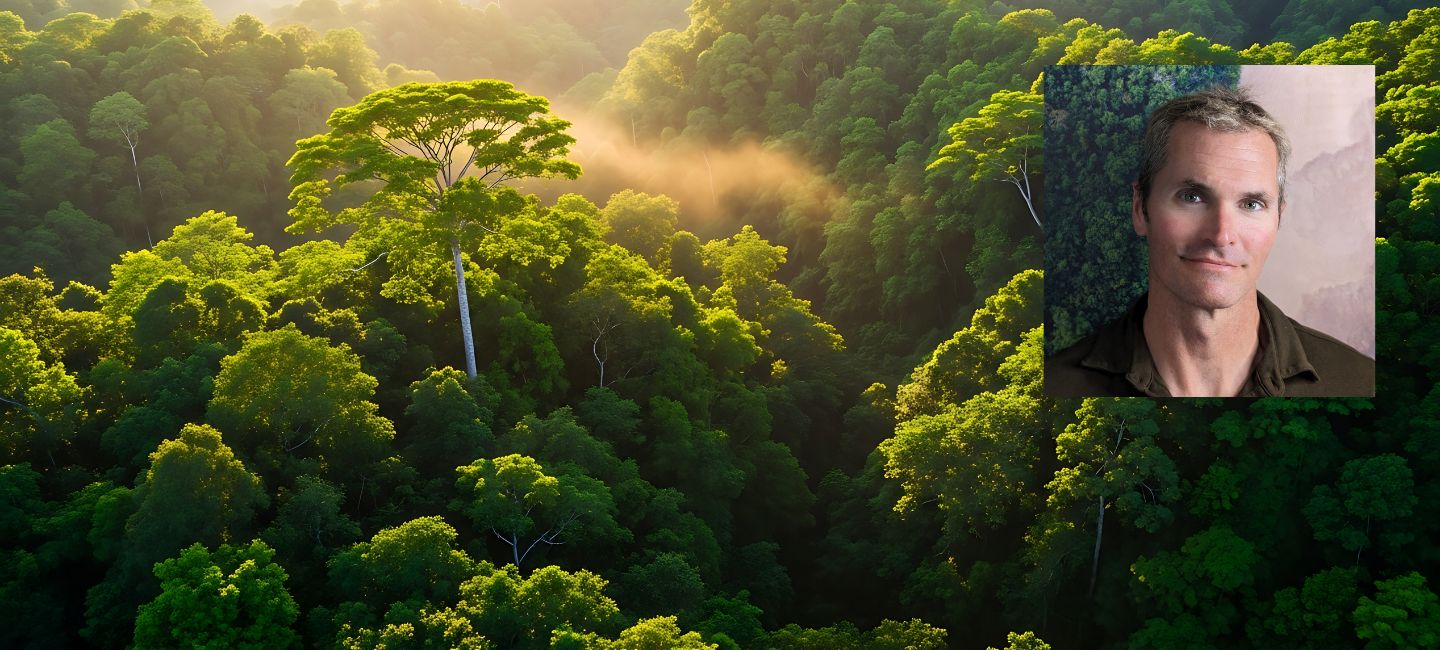
What you are about to hear was one of the live, keynote sessions from that weekend. I had the honor of sitting down on stage with Rhett Ayers Butler, founder and CEO of Mongabay, one of the most trusted sources of environmental journalism in the world. In front of that audience, we talked about the current state of conservation, the role of storytelling and journalism, what’s changing, what’s working, and where informed optimism fits into this moment.
You will also hear questions from the audience—conservationists bringing their lived experience, curiosity, and honesty into the conversation.
Without further adu, Rhett Butler,
[00:00:00] Crystal: Good morning everyone. It’s so good to see all of you and to be here today, and I am really excited about this conversation that we’re about to have because we get to hear from somebody . Whose work has touched just about every corner of the conservation world.
Rhett Butler is the founder and CEO of Mongabay, one of the most widely respected environmental news platforms on the planet.[00:00:30]
What began as a passion project two decades ago has grown into a global newsroom spanning continents and languages, producing rigorous independent reporting that informs policy, elevates local voices, and brings transparency to issues that are often hidden from view. Okay. Rhett has been widely recognized for his work and his impact.
He has [00:01:00] received multiple conservation, environmental, and, and journalism awards, including the Field Museum Parker Gentry Award, the Seal Environmental Journalism Award, the Hines Award for the Environment, the Henry Shaw Medal, and being named to Forbes Sustainability Leaders List. Just to name a few.
Yes.
What I admire most about Rhett is his steadfast belief, that [00:01:30] high quality journalism can be a force for change. He has built a platform that not only documents the state of our natural world, but also spotlights the individuals, the communities, and movements driving real progress. Today we get to hear directly from him about where conservation stands now, what trends he is watching most closely, and where he sees reasons for hope. Rhett,
We are so honored to have you here today.
[00:01:57] Rhett: Well, thank you so much for having [00:02:00] me.
[00:02:02] Crystal: So you founded Manga Bay in 1999, driven by a love of nature and wildlife. F Looking back, what is one moment early on that crystallized for you the power of story or journalism to change conservation outcomes?
[00:02:17] Rhett: Yeah. thank you. It’s an honor to be here. So for me, it began really early, so I always had a love of reptiles and amphibians, and I would always try to get my parents to take me to the rainforest.
And so the [00:02:30] first time that I had an in-depth rainforest experience was when I was 12. I went to Eastern Ecuador near Yasuni National Park. As you most of you probably know, is one of the most biodiverse places on earth. And so I had really incredible time there. We stayed in a fairly traditional community. I went out with the kids my age and looked for frogs, things of that nature. So I came back and a few months later there was a story in the newspaper about an oil spill that had happened on the Rio Napo up river from where I’d been. And so what that meant was this whole area was affected by this Oil slick. And so I just [00:03:00] wondered what had happened to my friends in the forest and the animals. And that was the first time that I really started to track environmental issues. So I went from someone who was into cool frogs to really wanting to understand what was happening to these ecosystems and these species.
And that was a moment that crystallized for me that journalism could have this impact. ’cause it, led me to down the road to what became Mongabay.
[00:03:21] Crystal: Beautiful. A few months ago you put out an invitation on LinkedIn asking conservationists what lessons, pivots or strategies [00:03:30] do they see emerging? Where is adaptation already happening, and what should come next? From the responses you’ve received so far, what themes are rising to the top?
[00:03:40] Rhett: Yeah, so one theme is that we are in a moment of change and it’s a difficult moment.
and so a lot of that, revolves around the need for resilience. And so thinking about funding models, so what. Certain groups are dependent on, until very recently, that has to change. And so diversifying income and revenue sources. So that’s been one major theme. Another has [00:04:00] been changing the narrative, so moving away from despair and I guess selling doom to really focusing on what are things that are working in the world and giving people a sense of agency by showing people even small examples of what’s working. So those are two of the big thematic areas. Another has been, local partnerships. and I think this has really accelerated over the past decade, is recognizing the role that indigenous people and local communities play in achieving conservation outcomes.
so that was a recurring [00:04:30] theme. Another has been around the use of technology. So it feels like conservation historically has been behind the curve in technology adoption. That has really been changing. it feels like that’s accelerated very quickly, and so conservation is catching up and it’s been really interesting to see, all the different ways that.
Conservation groups are using technology from, you know, from the ground all the way up into to satellites. so those are come some of the, key thematic areas that are emerging. I guess we’ll leave it there for now. Yeah,
[00:04:59] Crystal: sounds great. [00:05:00] I should have also said that I’m gonna be opening up for questions, in just a little bit.
So start thinking about what you wanna ask Rhett. Many conservationists ask, how do we scale what works? When you look at the stories your global team covers, what are the characteristics of conservation initiatives that are scalable or replicable across the geographies?
[00:05:23] Rhett: So I think scale often comes from many small successes.
So again, it’s often these very little, little projects [00:05:30] that, they have elements that can be replicated or copied in other places, and that’s what, that, that’s what actually can lead to a transform transformational change versus very top down approaches. and so one has been rec, sort of broadening the constituency around conservation.
So, you know, moving away from a conservation’s very. Just purely technical or science oriented, where you’re just specifically focused on sa on saving a species and thinking about how do these conservation efforts actually benefit local communities so that [00:06:00] they’re part of the system. And I mean, this should not be a surprise to anyone in the room, but this is really important.
And another has been around transparency and, and that’s both transparency around. What you’re doing, but also learning from failure. ’cause it feels like in conservation there’s often been, a lack of willingness to talk about failure, but failure’s actually how we learn. And so it’s really critical to, to understand that.
So if you bury failures, then you’re more likely to repeat those failures. and then and again, like the emergence of technology is another one. So this is, this has been [00:06:30] beneficial ’cause we have more data than ever before and so we no longer have ignorance as an excuse. And so if you look at what’s happened in, say, the Brazilian Amazon since the early two thousands, there’s been this big drop.
Well, downward trend in deforestation, there’s been drops and some increases, but, a large part of the, a large part of that drop has been attributed to the availability of satellite data. And once people became aware that, we can see what’s happening, and then that there, and that provided there was a political will to actually take action.
That was a huge contributing factor in making progress in addressing this [00:07:00] issue that, previously was much harder to address. And so that availability of data has also been really critical.
[00:07:06] Crystal: Actually, so that makes me think about ai. We are now in the, the world of ai. Where do you see conservation and AI joining hands and working?
[00:07:18] Rhett: Yeah, so I guess,most people in the room who’ve done field work would be aware of sort of like the, the issues around data. And so I think one of the problems that conservation is navigating is just this huge, huge amount of data that’s coming into systems, especially as you [00:07:30] have more and more sensors and remote sensing options out there.
So whether it’s satellite data or bioacoustic data or camera traps, you have to sift through huge amounts of data to actually turn that data in information. And so I think that’s one area where. AI can be really useful. And sure enough, we’re seeing that. So whether it’s identifying animals in camera trap, photos or videos rather than, have a human have to look through thousands and thousands of photos to say, is that, is that actually an animal in the corner there?
[00:08:00] to distilling information from huge amounts of satellite data like on say, deforestation or, incursions into marine protected areas. And so trying to. Help sift through the noise. and the same could be said about journalism too, is applying AI to understand and identify signals that are coming out of the data and then be able to like, then to dig into that, either as a journalist or a scientist to, really get to the meat of whatever the issue is.
[00:08:28] Crystal: So that kind of segues into this [00:08:30] question in the time of, well, speaking of journalism and whatnot, but in the time of social media disinformation and shrinking funding for independent journalism in the time of social media disinformation and shrinking funding for independent journalism, what role do you believe journalism and storytelling should play in conservation?
And how is mongabay adopting to the challenges?
[00:08:55] Rhett: yeah, I mean, so there, there’s a lot in that question, so, um, break it down a bit, [00:09:00] but, uh, I think starting with conservation, so I think like one, and I’ve already talked about this a bit, but one of the issues in the conservation space is the sort of the doom narrative.
I feel like for a while worked and engaged people, but there’s just so many things right now that a lot of people are feeling burned out. e eco anxiety is a common problem that’s cited by folks and so. Doom can be overwhelming and it can be paralyzing. So if you’re trying to think about how do we stop extinction or address climate change, it’s a [00:09:30] big sys systemic issue that’s hard to deal with.
Whereas if you break it down into little pieces, it becomes a lot more achievable and it can give people a sense of agency. So just for example, if you’re, if you want to address climate change, you have to transform economic systems. You have to transform energy systems. It’s very political.
it’s hard, right? And so as you, as like a person on the ground. it, it feels like you can’t do anything about it, but if you plant some trees, you can feel, you can hear the birds come back and the ambient air [00:10:00] temperature goes down. If you clean up a creek, you can see the water get clearer and the fish come back.
And so it’s something that you can do and it feels like, again, gives you a sense of agency and then that can build. And so your, your neighbors can see that they can be part of it. And so it, it creates this, this mechanism that can then lead to broader. To broader change. so that’s one important thing is really around narrative.
And so the other part of your question was around how Mongabay is navigating this. Yeah.
[00:10:27] Crystal: With all the disinformation out there and people [00:10:30] looking at science as like, no need.
[00:10:33] Rhett: Yeah. No, this is definitely challenging. So, you know, experts, it feels like experts are less trusted than ever before.
Mm-hmm. And so, you know, as Mongabay navigates that part of it is, is. Broadening the,the voices in the room. So again, if you’re talking to some expert, here in Washington who’s wearing a suit and, it’s like a talking head. And so for a lot of people that won’t resonate.
Whereas if it’s like your neighbor or someone who could be your neighbor who’s a farmer or rancher, who’s talking [00:11:00] about the problems that are very tangible for them, it becomes about the messenger. Rather than just the message. And so it’s a really good way to create that connection. And so that’s one aspect of it, is actually bringing people into these stories who are directly affected by these issues.
another is,so there’s a messenger and then there’s,really thinking about,the framing of these issues. So there’s this phenomenon that I guess a lot of people here would be familiar with, which is news avoidance. Roughly 40% of people now avoid the news because it bums them out.
They don’t trust journalists. [00:11:30] whatever. And if you look at that news avoidance by political affiliation, over 60% of people who identify as being on the right avoid climate environment news. And so for the issues that many of us in the room are working on, it’s complicated because you need to still reach those key decision makers who may be, right leaning.
And so how do you actually engage ’em on these issues? And one is to think about, okay, what are the, economic, business, financial, security [00:12:00] implications of whatever conservation work you’re doing? talk about that instead of leading with climate change. So it’s just now it’s just a different way to, to engage audiences that are really important for actually driving change in the world.
And that’s another way to think about these issues. and then going back to mongabay, one of the things that’s also important is actually showing your work. So showing your process, citing your sources. So it’s just, and again, like for some audiences, whether, if it’s in a scientific journal that might, that may hurt you, right?
Or, it may not be as [00:12:30] important as for a scientific audience, but it still is. it still is useful to show the chain of custody to that information. Bring in the local voices. these are all important aspects to, to reaching a broader constituent to reaching a broader audience and then building a constituency around conservation, which going back to one of your earlier questions, I think that’s also one of the key trends that’s been emerging is how do you actually build a constituency for conservation?
And I don’t wanna get too into the weeds, but I think one, one example of this is there’s a group that’s, that works in [00:13:00] Borneo. It’s, it’s actually expanded since then, that, uh, was looking at how to help protect habitat in Indonesia. And they started by asking, what are your needs? Rather than saying, you need to protect this forest because it helps stop climate change, which is a global issue, which, is not really relevant to the average person in Borneo, a rural person in Borneo.
They started with saying what do you need? Like, why, in order to stop cutting down the forest. And it turned out they needed high quality healthcare. And so what this NGO, which is called Health and Harmony did, is they created a, basically a healthcare system [00:13:30] that was available to everyone.
there were various mechanisms. They used to create incentive structures, but it was a really important way to deliver a specific benefit to people that they actually needed. So that they, it was another value that came from the forest that was very tangible for them, rather than trying to deal with this esoteric thing called climate change.
[00:13:49] Crystal: And was the, how was the healthcare in the forest related? Was it just something that they needed? So they were, that was. How did,
[00:13:57] Rhett: yeah, so that was probably a critical detail I skipped over [00:14:00] there. Um,yeah, so it turned out, so when they talk with, when they talk with communities, the communities, they learned that one of the biggest drivers of illegal logging was when a family had catastrophic healthcare.
Cost or catastrophic healthcare incident, which required cash right away. And so you could go into the forest, you could cut down some trees and then get money right off the bat. And so that was the connection between health and deforestation, or at least, encroachment to the forest, which then often led to deforestation later.
And [00:14:30] so what they did is they created this healthcare system. So it started with a clinic and. Yeah, every community had access to the system, but it was a tiered pricing structure. And so if a community eliminated illegal logging,around their area, they would get, lower cost healthcare. And, I mean, the healthcare was great anyway.
It was people would take a bus from 10 hours away to come to this rural clinic to get healthcare was so good, but getting even cheaper healthcare was beneficial. And they. They also had ways to [00:15:00] pay in kind, which I’ll talk about in a minute. It ended up becoming very important. But the point was, is that it created a peer pressure system within a community to stamp out illegal longing.
so as I mentioned, there were other ways besides cash to pay for, this healthcare. And one of the things you could do is you could get, trained in, organic agriculture. you could also take conservation actions, you know, like, you know. Protecting the environment in some way. It turned out that the organic agricultural training was highly valuable because the type of [00:15:30] agriculture in this area was highly dependent on chemical inputs, which were very expensive.
And so if you eliminated the chemical inputs from, your farming, that was one thing. But the other thing is it turned out that, more people started to produce, vegetables, which were a much more valuable, crop in the market. And so. Livelihoods dramatically increased for people who participated in this program.
So not only did they have access to cheap healthcare, but they also had an increase in income and a reduction in costs associated with their farming. [00:16:00] So it ended up becoming this like really nice story, where all the incentives were aligned. And so for that reason, the model was replicated in other places.
So Brazil, Madagascar, and they eventually built a hospital. So it’s been scaling up. They just got a large amount of money from Mackenzie Scott, so it’s it is amplifying and then other groups have now, are now embracing the model themselves and it’s really about delivering benefits to these community communities that are things they actually need.
[00:16:27] Crystal: That’s a fantastic case story [00:16:30] where for those who might want to further research that one, can you repeat where it is happening?
[00:16:36] Rhett: Yeah, so the group is called Health and Harmony. It’s also the local name is Project Astri, and so they’re in West Cal Manton, which is Indonesian Borneo, but they’re also in Madagascar in Brazil and I think other places now.
So it’s a very interesting model. I know they’ve partnered with other, with larger NGOs now to. to spread the model.
[00:16:55] Crystal: That’s fantastic. You wrote a commentary about how there is a need [00:17:00] for success stories in conservation. You said optimism is a strategy. Explain that.
[00:17:06] Rhett: Yeah, I mean, so I’ve talked about how the fact people are getting burned out and in the conservation space it’s very easy to focus on the negative.
in fact, for a long time. I was told that Mongabay was the most depressing site on the internet, which is not a good thing. It doesn’t feel good. and I, yeah, I’d read our headlines and yeah, I, I don’t know if the most depressing, but [00:17:30] definitely errors on the side of depressing. And so it made me think much more about, well, how do we actually rectify this because.
You know, there are good things happening in conservation. I mean, yeah, so there is climate change, there’s habitat loss, there’s extinction, all these other things. But there are success stories. And these success stories don’t, generally just don’t happen on their own. It’s because people are working hard and being thoughtful about how to solve problems.
And another factor is I think by default, journalists tend to focus on problems more than solutions. So if you have a solution that’s 90% effective. The [00:18:00] convention is for a journalist to focus on the 10% that’s not working. So you actually have to frame things from the solution standpoint.
At the outset, it’s it. S it’s just the nature of what we do. And so we started thinking about how can we get more solutions journalism into our reporting? And so we started to develop a series on certain topics that were solutions oriented. So one was, for example, indigenous-led conservation.
Another was conservation technology. How can conservation actually leverage emerging technology to, to be more effective? Um, in other words, agroecology. So, [00:18:30] you know, really drilling down on these, on these. Topics where there’s an opportunity to talk about how people are trying to solve problems. So not just the problem, but how we’re solving problems.
So it’s not greenwashing, it’s not, having your head in the clouds. it has to be real based off data. Yeah. Otherwise it’s not gonna work. and so that, that’s what I mean by that is it’s optimism is just not feeling optimism or hope is not just a good feeling. It has to be based off of actual substance and you have to work at [00:19:00] it because it can be hard to see those success stories, when you’re focusing at too high a level.
But you know, sure enough, we’ve seen, species rebound. we’ve seen, Ecosystems come back. And so it is possible and we need to highlight those, the success stories to give people, again, a sense of agency but also ideas to replicate. And so you have to work at it. It doesn’t just, it doesn’t just happen and it has to be real again, like so, you know, I think it is informed optimism.
You can’t just have blind optimism ’cause it’s not gonna [00:19:30] get you anywhere or it’s all gonna collapse on itself. And so we’ve try to do more of that at Mongabay. Bringing the solutions journalism, I would say. It is not the majority of our stories, but it’s more stories than it was 10 years ago. And, uh, you know, we’re, we’re working at it, but I think it’s, it was also a broader message that emerged out of the, kinda the feedback we’ve been getting through this process.
[00:19:50] Crystal: Yeah, I’ve been told that optimism is a verb. So it’s something you have to work at. what kind of feedback have you gotten from that change in the [00:20:00] journalism? Adding more solutions based stories? Have you seen any feedback or, I mean, have any feedback or, yeah,
[00:20:06] Rhett: the feedback’s positive.
People like those stories. so going back to the news avoidance issues, so again, roughly 40% of people as of 2022 were avoiding. The news now was across, I think it was 60 countries. I’m sure the number is much higher now because. One would say the news maybe hasn’t gotten better in, in the past few years.
but one of the interesting things is if you look at self-identified news, avoiders is [00:20:30] the type of information they still consume. And so the top thing on that list was positive news. And the second thing was solutions news. And the third thing was explainers. Like how or why things work a certain way.
And so it shows that people, you can still engage people who are otherwise tuning out. And so from Mongabay’s standpoint, You know, it’s valuable for audience expansion and engagement, to provide information that people actually want to consume. so that’s been an important factor.
[00:20:58] Crystal: We should open it [00:21:00] up. I have a few more questions, but let’s open it up to the group. thanks Dave.
[00:21:06] Audience 1: Going. Hi. So speaking of, free independent journalism, I’m sure a lot of people in this room know of a certain zoo in India that’s sucking up animals and run by someone who’s backed with his daddy’s money and daddy’s legal team, which has been threatening a lot of journalists who try to do completely objective [00:21:30] stories about them.
’cause what they’re doing is quite illegal. But I’m wondering if you have any experience dealing with that or even with that particular entity, and how would you deal with that?
[00:21:42] Rhett: Yeah, I mean, I know what you’re referring to. we do have some, uh, there’s actually a good story recently talking about the legal strategy of this, of this entity and how they’re sending out like legal threats, which we’ve gotten lately.
but yeah, I mean, it, it is tricky. my understanding, there’s some information that will soon come into the public domain that will be supportive [00:22:00] of reporting this space, but it is a much broader issue where you have very, you have actors who are becoming more and more powerful, who are not open to free press who.
trying to shut down journalists or NGOs or things like that. And it’s across countries, it’s across borders and it’s something we have to navigate pretty regularly. So we get lots of cease and desist. our approach has been to focus on what does the information actually say and what can we publish based off of.
stuff that’s [00:22:30] ironclad. So you have to steer clear, like speculation or feelings or things like that and really focus on where do you have re credible evidence. And so sometimes it means you have to strip out. 95% of the most interesting aspects of the story. And you come out with something that’s relatively, I would say it’s relatively bland, but it’s out of necessity.
’cause that’s what you have the most proof for. It’s a little bit like how, the US was able to go after Al Capone for tax evasion versus like other crimes committed because it’s the one you could [00:23:00] really nail down. And so that’s been our approach. And yeah, we’ve had a number of cases where, we’ve done reporting on say like deforestation or something, and we can really only foc, like we can’t focus on, like if we don’t have evidence of corruption or like other crimes, we can say this is what the satellite data shows.
Like trees were here and now the trees were gone. So there’s that common thing. And sometimes when you just put that information out there, then it creates a space for other actors to then build off it so they can add more color or people you’ll have whistleblowers step forward to [00:23:30] provide more.
Evidence, which then can be reported on. So again, for me, it like really comes back down to that evidence base as being really critical for navigating actors like that.
[00:23:44] Audience 2: Hello everyone. And hello, Rhett and Crystal. my name is Andres. My question is Costa Rica. Canadian Framed, I’m from the Caribbean cohort.
Caribbean cohort. Yeah, only me I know.[00:24:00]
So in a world where we have, I work in a organization that has 35 to 40 people. We have our quarterly magazine and we try to do good journalism even though it’s very hard because we have a relatively small team and in an age in which. you said that scale is a whole bunch of little actions, right?
And that joy needs to be part of it, or you frame it as optimism and so that narrative needs to come in, but we have rage [00:24:30] bait, and we have algorithms that will definitely not use that. So we could either feel the pressure. Of going into a rage bait for this to go up the algorithms and talk about the zoo in India in a really bad way, and then people get sad and angry, or we can start doing what you did, which is kind of moan those means of production for communication and start tagging in there.
So here’s the question. As the small non-for-profit that is trying to bring certain narratives from grassroots levels, indigenous led conservation, how do you make [00:25:00] it to the top of those algorithms and how do you connect? This news to emerge, particularly in the Post Truth era. Thank you.
[00:25:10] Rhett: Yeah. So I think it requires, um, stepping back a little bit and really focusing, like your first question should be, who are you trying to reach?
Who’s your audience? Monogamy’s approach has not been a chase to algorithms. So we never did SEO search engine optimization, for example. We always just focused on creating high quality content. And that was actually very useful over time because, the [00:25:30] algorithms change, with social media, it’s very algorithmically driven.
but we made the decision several years ago to basically deprioritize Facebook. And at the time Facebook was about 85% of our referral, external referral traffic. So this is not a decision we entered into lightly. But what we found looking at the data is Facebook was driving a lot of low quality tra, low engagement traffic.
So people wouldn’t stay very long. They wouldn’t scroll very far. They went for as many pages. And so before we made this decision, we reached out to funders and our board and things and said, Hey, we’re gonna make a decision. It’s probably gonna have a big [00:26:00] impact. It’ll probably be reversible, but we’re gonna try it and see what happens.
And so the month after we made a decision, we lost 4 million visitors to Mongabay, which if we were advertising based, which would’ve been devastating, but we’re impact based. So we’re focusing on who specifically we’re reaching, not necessarily how many. And so what happened was is,another proxy for measuring engagement is the total amount of time that people spend on Mongabay that actually increased despite losing 4 million visitors.
So it showed by focusing our [00:26:30] efforts on other platforms that were higher quality engagement, even though it was lower, the argument of amount of time went up slightly. So again, it’s it chasing the algorithms. Can be a strategy if you’re trying to, if you have like hearts and minds, if you have a hearts and minds approach or certain.
Certain objectives, I guess like our approach is really reaching key decision makers, so it’s across different verticals, and so we write in a general interest format in order to cut across those silos. But ultimately, we’re not trying to reach like our goal is not to reach the most number of [00:27:00] people, it’s to reach the key people who actually make decisions that lead to some outcome in the world.
So again, I would say start with identifying who your audience is. Which then forces a question of what platforms do they use, who influences them, what kind of information do they use to make decisions, things of that nature. So that should be the core. And again, if you’re trying to, do hearts and minds, and that’s very different.
So maybe you have a big TikTok strategy, but for us TikTok, for manga, big global English, at least TikTok doesn’t. It doesn’t lead to [00:27:30] impact in our experience. Like we’re not selling things like you’re trying to convey ideas that don’t necessarily translate that well for TikTok, but for Mongabay Indonesia, which specifically has a youth target audience, TikTok works really well.
So again, it, it’s hard to make a general statement without knowing exactly who your audience is and what your goals are. So I would really start there.
[00:27:51] Audience 3: hi, Rhett. great to meet you. I guess on a macro scale, just curious, what do you think is or are the biggest [00:28:00] communications challenges the conservation space faces now from communications point of view, and where do you see some of big opportunities in our evolving media landscape in the world.
[00:28:10] Rhett: Yeah.
So I think is one is escaping sort of the doom loop, which I think is happening now more and more. But, it still feels like some groups lead with that narrative, which maybe three years ago might’ve worked, but now people are burned down on it, so they turn away. another has been getting local voices from the field.
so that’s something that Mongabay tried to address, [00:28:30] but,really leading with, what is the narrative? So I’m a numbers guy, so like I’m very interested in the numbers, but I’m also not normal. So, you know, most people won’t remember how many square kilometers of Amazon rainforest were cut down last year, but they might remember,
the dolphins dying because the temperature of the lakes, increased the record levels last year. Or like a community that lost its traditional forest. So really thinking about story, putting story at the center of it. The center of it. So it’s not [00:29:00] ignoring facts, it’s bringing facts into that and numbers into that.
But leading with narrative ’cause that’s what will connect with people. And so sometimes you’ve got like a herd of wildebeests, for example. maybe some people care about the herd of wildebeest, but it’s like that one wildebeest who has the calf that was killed by the lion. people connect with that story ’cause it’s this individual to individual.
So putting story at the center I think is probably like one of the most fundamental things that needs to be done more in conservation. And again, I think a lot of groups are doing it well, but it’s something that could be done better. And then I think also [00:29:30] communicating with journalists. I’m at the front end of a torrent of.
People reaching out to me for pitching story ideas or whatnot. And,it’s, there’s so much stuff coming in. Like you really have to think about, who, again, who your audience is. me versus like a, like one of our af like a reporter in Africa. you’re pitching me on a story, on.
Climate change and its impact on cities in Africa. Like I’m not the right audience for that. ’cause like I don’t cover Africa, I don’t cover urban issues. You should be reaching out to our, one of our African correspondents. So again, thinking about [00:30:00] audience and targeting it and like what resonates with them is important.
So just being thoughtful in that regard. I think a little bit more about that. But then I think also, just going back to my comment before is really audience. So For most people, it’s not gonna make sense to do all the social media because you probably will do it poorly. So really trying to pick the platforms that resonate with the audience.
Audience you’re trying to reach
[00:30:20] Audience 4: Hi, I have a, I have two completely different questions, but I’m gonna go with the first one. So I work a lot with wildlife trafficking and one of the issues that [00:30:30] we’ve talked about within the collaborative, I’m involved in is what information kind of entices people to maybe get involved in trade and what should be.
Kept out, or if there’s certain things that make people, if you put prices, for example, on what people can make from selling a turtle or whatever else, does that exacerbate the issue? Because we know that, poachers and traffickers or reading [00:31:00] publications of all kinds. And then the other issue related to that is sharing specific locations.
Of where these organisms are, where a new species was found. Things of this.
[00:31:15] Rhett: Yeah. So I think the price issue is a problem because it’s like, wow, I can make $50,000 killing a, killing a rhino. That sounds like a great business for me. so I think that’s how you engage people in, in wildlife trade is you like, bring them in because it seems like a good economic [00:31:30] activity if you lead with price.
So I think, going more towards story, Focusing on like individual animals that were poached. if you have an example of the, an elder, say elephant that was killed for its ivory, like telling that story of the importance of the knowledge of elders in an elephant community. And like really engaging people on that issue or talking about the human costs of trafficking, the fact that it’s associated with, human exploitation.
So leading, leaning into those more emotive aspects of the [00:32:00] issue rather than the price. Because I do think the price sends the wrong, potentially the wrong signal. It bring it, it’s the wrong kind of engagement. I think you can also go after, and I mean it’s the same sort of messaging, but going after the platforms too that are enabling this trafficking.
And your second question was around, oh, species. Like where species are found? Yeah. I mean, so this is a big issue. I would say maybe 10 years ago, I felt like this issue came to a head in scientific literature because, someone would publish a new description of an [00:32:30] amphibian or, dart frog or whatnot, and then a bunch of collectors would jump on the first airplane and fly there.
Right. and so that information. I don’t actually know if this is true, but, still, but for a while there was an effort to redact the specific, GPS coordinates or talk about it more generally. I dunno if that’s held, but it was an issue that came up and people were aware of and trying to address because it was essentially provided the coordinates for wildlife traffickers to go exploit newly described species.
And like in Mongabay, [00:33:00] we’re sensitive to this. Like when we do our reporting,if there’s like a camera trap sighting of a, of an endangered, Javan Leopard or something, there’s, I guess there’s not a lot of, there’s not a lot of trafficking for that species specifically, but say like a, Sumatra and Rhino or something, you don’t want to say the exact coordinates within the park.
the problem that we run into as journalists though, is that sometimes the scientists will say. It. And so it’s like it’s out there. So like recently there was a story about,Sumatra and Rhino being found evidence of Sumatra Rhino being found in Waycombus, [00:33:30] which is, in Sumatra.
And we, we got torn to pieces because we were put on the story, but it’s like, well, this is what the NGOs put out and. Our belief, our understanding was that they had done a risk assessment to understand the implications of this research or this information put on the public sector.
so it wasn’t necessarily, Mongabay is a vehicle, but we weren’t the source of the information, but we still got hammered. Nonetheless, you’re exposing them to poaching, you know, sort of thing.
[00:33:55] Audience 5: so first, Rhett, Crystal, thanks for this session. I think it’s a really good discussion. I think [00:34:00] if we put on rose colored glasses, we all like to think that conservation is nonpartisan, supported across the aisle. There’s nature as nonpartisan groups. There’s conservation as conservative.
But I think the reality is that any publication that’s talking about climate right now that is putting it out there is seen, at least in the US context as being left of center. We’ve all seen the media charts where it puts, where media outlets fall. do you know where Mongabay falls on something like that?
Where you guys are viewed and if you’re looking to [00:34:30] do impact, and the audiences that you’re reaching, do you think about how to. To ensure that you are reaching, across the aisle.
[00:34:38] Rhett: Yeah. So we’d be characterized as left as center for that reason. I think the political spectrum changes and, certain political people lean certain way politically may champion science versus being skeptical of science.
it’s a little bit hard for us to navigate in terms of how we’re trying to do this internally. I can say things up here that I would like to do, but it is much harder to actually get [00:35:00] independent journalists who are operating autonomously to actually then do those things. And so what I would love to see is,if we’re doing, if we’re doing a story on, the impact of wildlife trafficking, we could talk about the impact on wildlife and things like that, but then also thinking about very specific audiences, like who is the prosecutor?
Like in, or who is the person who’s interacting with Fish and Wildlife Service and the Trump administration? what kind of information would they need from this investigation that would actually engage them and it like, might lead to some action. And so like specific [00:35:30] spinoff stories from that. And so one example, and it’s not the US context, so I apologize for that, but it’s, it is a specific example.
several years ago we were doing an investigation into this massive oil palm plantation on the island of, new Guinea. It was Indonesia, new Guinea. I’m just the biggest one ever created, essentially. And, the team found evidence of a $22 million bribe. And,The story came out, there was mention of this $22 million bribe, but then there was a second story that came out that was based off conversations [00:36:00] with, law enforcement about how you would actually prosecute a case like this.
And so they were talking to, I think it was Treasury Department officials, and basically created, breadcrumbs about how you would prosecute this case, like.A how to essentially. And then the Indonesian anti-corruption agency. The Kaka then did an investigation and we had an understanding from people there that they read that story.
And so it’s like, you know, the, you have this,piece that’s targeted for one audience, but then you have spinoff pieces [00:36:30] that are targeting very specific other audiences. And so I think, whether you’re a drills organization or an NGO, you could think about that. And while. Mongabay as a whole might be seen as leftist center.
If you have the right story that checks the right boxes and, engages, can sort of engage someone around what they really care about. They may read it otherwise, even if they think, we’re a bunch of, communists or something. yeah.
[00:36:56] Audience 6: Hi, Rhett. Good morning. nice meeting you again.
,
[00:36:59] Audience 6: so [00:37:00] I have two questions right now. You’re talking about optimism, and as you know, conservation is always a marathon. It’s not a sprint, right? So sometimes the optimism comes at very last minute, but every year we have to report, we have to give hope. That we can depress me as someone who’s on the ground who sees something that I is not within my control.
We are fighting one issue. So there is another issues I have to give hope when I’m also not very hopeful sometimes. So I want to get your [00:37:30] tips and tricks how we do this. Uh, second one is that. Oh, usually journalists when they come to us, they already have a narrative in their mind. I want to tell this story.
And whenever we try to make them change to like, I think you should tell this story instead of this story. but they know I want to tell about this story. So, I have a lot of hesitation whenever people wants to come with me to the, because I’m working with oil power industry, so they, I’m afraid that when they come in and talk about elephants, [00:38:00] they will also try to dig on other things that can be controversial, which will jeopardize my work with the industry that I’ve built so many years.
So, I will also to, get some tips, tips from you as well on this. And I have my friend’s next.
[00:38:17] Rhett: Yeah, so the first question is kind of around paradox. Like the fact that the people that, that you see problems happening. I don’t mean to dress up, like everything we’re doing sugarcoated as optimism or It’s all hopeful.
I mean, I think there’s a [00:38:30] lot of negative and positive. So it’s, two steps forward, three steps back sometimes. And that’s just the reality. so I actually wrote a piece about this, about specific. Idea. I’m not like a self-help guru or anything, but I did write a piece that talks about the things that I do to like embrace optimism.
But again, like it’s not, I’m not like a super happy, like, always optimistic person. it’s based on reality. again, like I, I can give you that. Story, but at the high, I guess at the most basic level, sometimes it [00:39:00] really just comes down to breaking down a problem into little pieces and thinking what are solvable or what are the specific things where you’re making progress?
’cause sometimes looking at the big picture can be very overwhelming. And so it’s, it’s about, it’s about identifying where you can make progress, like where your gaps are, and then try and move forward where you can. And then just acknowledging when you do have success. Again, like this is probably like a 10 minute response, I would say.
I can share, I don’t know if there’s a way to like share stuff, but, okay. [00:39:30] Okay. Yeah, so I published this maybe two months ago, but it was, ’cause I wrote a piece about the need for optimism and people are like,I’m bummed out and I don’t believe this. I’m like, okay, I need to be more, more helpful here.
So I wrote a secondary piece that was more, more helpful. So this, the second component, which is very, which is different topic is, is around. Navigating journalists basically. So what I would say is in situations which are delicate, where you’re, you’re having to deal with partners who are oil palm plantations who may also be.
Doing some things that a journalist has in their mind that are [00:40:00] bad,is talking about what the issues are and the complexity and hoping that the journalists can like, understand that this is not like a black and white issue. It’s not like palm oil, bad elephants good, that there’s a lot of nuance to this.
And so just being clear at the outset of all the complexities are involved and a good journalist shouldn’t just go into it with, a dedicated, this is how my story’s gonna be, regardless of the input that comes in. really that, that, that shouldn’t be a journal’s approach.
It’s like you should go in there and try to understand the situation and recognize that your story may evolve [00:40:30] based on the facts that are presented. So I would err towards more transparency in talking about those difficult issues because I think it actually adds a lot of color to a story versus a story that’s just like black and white.
so that’s probably where I would leave it. But if you remind me, I can send you a link to the. To the how to optimism piece. Again, there are people who are much better positioned, who are experts in this that could talk about it, but it’s what I do.
[00:40:57] Audience 7: Right next door here. and the answer to this may [00:41:00] be just as part of your, your piece about, optimism. but you,you mentioned the need for discussing failure and using that asas a tool for learning. and I’m curious if you have strategies for framing failure through the lens of optimism without waiting into doom, because.
talking about what hasn’t worked, can pretty easily go down a path of doom. So,
[00:41:23] Rhett: well, I think the key thing is talking about what you’ve learned from failure. So you set it up with a failure, but then you talk [00:41:30] about, and this is how we’ve improved. there was someone, I don’t know if people know IDO, it’s like a design lab.
And the point that they made was, you should embrace suckiness. So the idea is if you find something that’s terrible in the world. It’s an opportunity to fix it. And so that’s what they’re, this person’s whole approach to IDO is basically like look for things that are, that suck in the world and then try to make ’em better.
And if they suck really badly, then it’s like a huge opportunity because fixing it makes it so much better. in terms of communicating [00:42:00] failure, I think it’s really important to say we failed here, but then these are the things we learned. Like we, we learned that the actual problems are X, Y, and Z, or this is how we responded to it.
And so frame it that way.
[00:42:11] Audience 8: Hi. Thanks, uh, David. Crash Eight, I must say. Yeah. Uh, Thanks. I want to bring one aspect of the media, in, what we are regarding as an emerging threat to the species that I [00:42:30] work with. In particular, which is painted the dogs where, the pressure on these species is becoming more and more ’cause of, it’s either the fumes that have been made, I won’t mention them, by these acclaimed, houses and this.
Unintentionally then brings a whole flood of people that really want to get up and close with the species, at whatever [00:43:00] cost. I wonder, how that can be, addressed in terms of you know, how do we manage media and be it, mainstream or social media in terms of. people’s behavior around wildlife, recognizing that there is still wildlife, recognizing that they also need their space.
Is this something that, is in your, as you write, is it a kind of the messaging that you put, when you write [00:43:30] about some of these species that people should always, respect, wildlife as much as we want them? To see and connect with wildlife. That’s number one. number two, something that you brought up, which is quite dear to, to me, and I’m sure to everybody, is the issue of community benefits.
more often than not, communities don’t really come up in the stories we write when we talk about wildlife. and if they come, they’re [00:44:00] almost like an afterthought. We had a situation, some years back in Zimbabwe about, a famous lion, that was killed and recently, I think there’s another one.
and there were issues around, human wildlife conflict. Within those communities. But the aspect of how people have been living with this animal or these animals was quite, minute compared to the big story that saved a certain [00:44:30] audience that really did not benefit the people that live with each wildlife every day.
And I wonder, as an organization, as big as you are and the great work that you’re doing. How you are co-opting the stories of the people,and how this should be center stage to the rest of the conversation around wildlife and coexistence. I thank you.
[00:44:55] Rhett: yeah, so for the first question, which I think is [00:45:00] often, a lot of it’s a social media question, so yeah.
Media, but. A little bit different. it is very challenging. I mean, this is true with not only species, but also ecosystems or like beautiful places where you highlight and then all of a sudden there’s a flood of people going there. And I don’t know if you can necessarily put the onus of that on journalism or media outlets necessarily.
there is a role there, but it’s a challenging thing. It’s if there’s something beautiful and people wanna see it, they’re gonna go. And so it becomes a [00:45:30] management issue that also has to be dealt with locally. ’cause I don’t think it’s reasonable to, I mean, I, I mean, it’s hard for a journalist to predict that if they do this story, that all of a sudden there’s gonna be, 12 million people swimming with, Pygmy sperm whales or something. and so it’s complex. So I mean, I think there’s a story that we published a couple days ago, a around on East Tim Moore around unregulated whale tourism. So it’s a great place to see whales apparently. And also the tourists are flocking there, and they’re just not the [00:46:00] infrastructure.
to manage it sustainably. So there’s just like tons of people going there right now. They’re chasing whales. Like it’s it, so we published a story about the problem. that’s how we’re looking at it. I don’t think, we definitely didn’t publish the first story about, about swimming with whales in East Timore, I don’t think We published one.
We published one about the problems associated with it. So it, it is a tricky issue as is the second one. so in Mongabay we are, we’re trying to bring in local voices and we have local reporters, so we’re definitely not perfect. But, we’re aware of this, [00:46:30] but it depends on what the editor and the journalist decide to pursue.
Like, the angle they’re going after, I think, is the people in this room. The way that they can influence this is by talking about the role of communities when they are speaking with a journalist. Because if you’re, if you’re a scientist or a conservationist and you’re just talking about your work and how awesome the species is, and don’t mention communities, it greatly reduces the likelihood that a journalist is gonna bring the community into the story.
I can’t speak for all outlets obviously, but I can [00:47:00] speak for Mongabay that, our journalists rely very heavily on the people they speak with. And if those people don’t mention communities,it’s a missed opportunity, I guess is how I look at it.
[00:47:10] Crystal: Thank you so much everyone.
That was fantastic. I wanna leave us with one thing. Given all of the challenges that conservation is facing, what keeps you hopeful?
[00:47:23] Rhett: Yeah, I mean, I think the biggest thing that keeps me hopeful is there. All these incredible stories of people [00:47:30] achieving great things with almost no resources. So just people with mod, very modest backgrounds and I see it over and over again.
So it it’s almost like Sha shames you into wanting to do more. It’s ’cause this person achieve these incredible things and they have nothing. And what have I done today? Sort of thing. So that’s one thing, and that’s actually one reason why I write obituaries is I. it’s sad when people pass away, but what’s even sadder is like when all their work just kind of, no one knows about it.
And so it’s just trying to [00:48:00] bring their work into a bigger context and inspire people to also get involved or understood what they did. And so that’s also important for me. Um. I think also just very basically is getting out in nature. I think a lot of people forget, they get into this.
I’ve never been a conference person, and , I, I recognize, I’m speaking in a conference here, but there’s some people who are like on a. On a conference schedule where they just go to conferences all the time and they don’t actually get out in nature. So for me, that’s really important, just is getting out there.
I think the emergence of, new leaders is also really important. And [00:48:30] so, you know, in the conservation sector as well as other sectors, there’s a lot of. Legacy leadership and sort of like, uh, within big institutions you kind of, and I think also within politics you lock into this older generation, but the reality is that older generation eventually is replaced and so you need to find new leaders and I think that’s why this program is.
so important and so great and we need more programs like this, or programs need to be bigger. so yeah, I mean, those are things, and I think, I guess the last thing I would say is, is the availability of data. So just the fact that [00:49:00] we no longer have ignorance as an excuse. Like we can’t say we don’t know what’s happening in the world.
We can see it. So we just have to now create that political will, which is, probably around narrative and, and all the things we’ve talked about here today. So thank you again.
[00:49:14] Crystal: Rhett.
This has been a highlight for me. Thank you for all that you do. You are making a difference. [00:49:30] Thanks.
As we wrap up, I want to pause for a moment of gratitude.
This conversation was a true highlight for me—not only because of the chance to speak with Rhett, but because of the community that surrounded us in that room. The Emerging Wildlife Conservation Leaders Summit was filled with love, respect, generosity, and a deep commitment to doing this work thoughtfully and together.
I am grateful to EWCL for twenty years of building and nurturing a global community of leaders, and for creating the space where conversations like this can happen. I am grateful to the audience members who shared their questions so openly, bringing their lived experience and perspective into the dialogue. And I am deeply grateful to Rhett—for his time, his humility, and for the decades he has spent shining a light on both the challenges we face and the people working to meet them.
If there is one thing I hope you take from this episode, it is the reminder that informed optimism is not passive. It is not usually easy. It something we must practice. Something we build. And something that grows when we listen, learn, and stay connected to one another.
Thank you for being part of this season of Forces for Nature, and for being part of this community.
Don’t forget to go to forces for nature.com and sign up to receive emailed show notes, action tips, and a free checklist to help you start taking practical actions today. [00:34:30] Do you know someone else who would enjoy this episode? I would be so grateful if you would share it with them. Hit me up on Instagram and Facebook at Becoming Forces for Nature, and let me know what actions you have been taking. Adopting just one habit could be a game changer because imagine if a million people also adopted that. What difference for the world are you going to make today?
For this special live conversation, Crystal sat down on stage with Rhett Ayers Butler, founder and CEO of Mongabay, one of the most trusted sources of environmental journalism in the world.
Together, they explored the current state of conservation- from resilience and adaptation to the role of journalism, storytelling, technology, and informed optimism. The conversation also opened up to the audience, inviting questions from conservation practitioners working across ecosystems, regions, and disciplines.
This episode was recorded live at the Emerging Wildlife Conservation Leaders (EWCL) 20th Anniversary Summit, a gathering that brought together conservation leaders and practitioners from around the world to celebrate two decades of community, collaboration, and impact.
What emerged was an honest, nuanced dialogue about where conservation stands today, what is changing, what is working, and how we continue moving forward- together.
Highlights
- What are the characteristics of conservation initiatives that are scalable or replicable across the geographies?
- How is Mongabay adapting to the challenges of distrust in science and disinformation campaigns?
- How is Mongabay using optimism as a strategy?
What You Can Do
- Pay attention to the stories you share. Seek out and amplify conservation stories that highlight solutions, learning, and community leadership, not just problems.
- Build constituencies, not just projects. Think about who needs to be at the table for conservation efforts to succeed, especially local and Indigenous communities.
- Practice informed optimism. Look for evidence of what is working, acknowledge setbacks honestly, and use both to guide action.
- Support independent environmental journalism. Reliable, transparent reporting plays a critical role in accountability, awareness, and change.
- Stay connected to nature and to one another. As Rhett reminds us, getting outside and nurturing community are essential for sustaining long-term conservation work.
Resources
- Mongabay
- Emerging Wildlife Conservation Leaders (EWCL)
- How to Find Optimism article
- Rethinking How We Talk about Conservation and Why It Matters article
- Health and Harmony (Project ASRI)
If you enjoyed this episode, be sure to subscribe, rate and review it on your favorite podcasting app! This helps to boost its visibility.
Hit me up on Instagram and Facebook and let me know what actions you have been taking. Adopting just one habit can be a game-changer because imagine if a billion people also adopted that!
Never miss another episode! Sign up to receive email updates!
What difference for the world are you going to make today?
WANT TO ALSO BE A FORCE FOR NATURE?
Sign up below for a fantastic (and free!) guide to help you start taking practical actions today! Plus, you’ll be subscribed to receive the newsletter with podcast show notes and even more action tips.
Recent Comments