
Crystal: [00:00:00] Hey friends, if you’re here, I’m going to assume that you’re interested in environmental stories, and in that case, I wanna recommend that you go check out the Healthy Seas podcast. I host that show for a fantastic marine conservation organization called Healthy Seas. The guests are all about making waves around the world to protect our oceans.
Go dive in and take a listen.
I am Crystal DiMiceli and welcome to the Forces for Nature Show. Do you find yourself overwhelmed with all the doom and gloom you hear of these days? Do you feel like you as just one person, can’t really make a difference? Forces for nature cuts through that negativity. In each episode, I interview someone who is working to make the world more sustainable and humane.
Join me in learning from them and get empowered to [00:01:00] take action so that you too can become a force for nature.
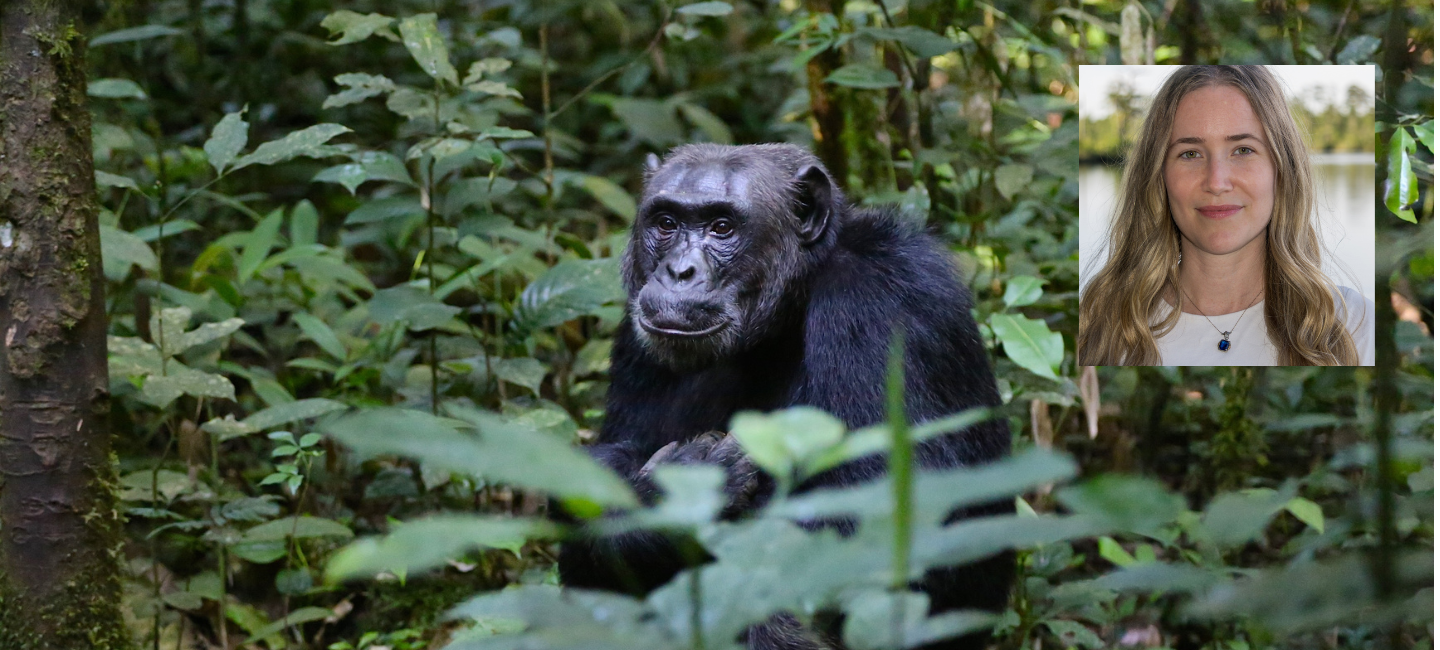
Welcome to another episode of the Emerging Wildlife Conservation Leaders Program series. Imagine a baby chimpanzee. Clinging to the bars of a tiny cage. Her mother has been killed in the forest. She’s been taken as a pet, and after years of confinement, she barely remembers what it feels like to climb a tree or to hear the calls of her own kind.
This is the reality for countless primates across Africa. Victims of the illegal wildlife trade and habitat loss. But when that cage door finally opens and she steps hesitantly into a forested enclosure filled with other chimps, everything changes for her. It’s the start of a second chance at life. And for the Pan-African Sanctuary Alliance, it’s one of thousands of rescues that define their mission.[00:02:00]
Today on Forces for Nature. I’m joined by Kaitlyn Bock, who has spent the last decade helping sanctuaries across Africa care for orphaned and endangered primates. She just finished her tenure with paa, but her insights into what makes a true sanctuary, how they support animals through trauma. And why they are a critical piece of the conservation puzzle are more relevant than ever.
Together we’ll explore the hidden world of African sanctuaries, the challenges they face, and how each of us can play a role in supporting their work.
Hi Kaitlyn. Thank you so much for joining me on Forces for Nature. It’s so great to have you. Thank you so much for having me. I’m really excited to talk with you today. So let’s just dive right in. Can you briefly share your journey into conservation and how you came to lead programs at Pasa?
Kaitlyn: I have always wanted to work on behalf of wildlife.
I’ve [00:03:00] always loved animals, um, since childhood and when I started college, I was studying environmental studies and I knew that I needed more hands-on experience. That led me to a series of internships, one of which was an internship at the Center for Great Apes, which is a great apes sanctuary in Florida.
Amazing sanctuary. And from there. It was my first time interacting, working on behalf of orangutans and chimpanzees, and they were so amazing. I was so blown away by particularly orangutans when I saw them for the first time. I was so amazed that there were animals like this on planet Earth and that they were arboreal and enormous and like the most extraordinary thing I’d ever seen, and I kind of just followed that.
Passion and followed, followed that thread, so to speak. And I had a smattering of other internships, like [00:04:00] I was just bouncing around a lot. Eventually I followed my passion for orangutans and I went to Indonesia and I started working on behalf of an organization called Orangutan Foundation International.
And I was a volunteer working. Um, I was originally brought on as a communications volunteer, and then. I even worked for a stint as the assistant to Dr. Barte Ticus, who is like this legendary primatologist, and that is her organization. And those orangutans were survivors of what was like, sort of like an environmental destruction happening in Indonesia in the form of palm oil plantations.
Just mass development of palm oil plantations. So all of these, I was meeting all of these orphan orangutans and they were so amazing and so special, and they had so many different personalities, and it was like a very moving [00:05:00] experience. When I left Indonesia, I felt like I, I need to, I need to never forget about this moment.
I need to. Always make it my life’s work to try and work on behalf of orangutans or work on behalf of the animals that were like victims of essentially our unsustainable lifestyles, like at the human race. I mean, so that kind of led me to pasta in a weird way. I really needed a job. And pasta, which is the Pan-African Sanctuary Alliance, at the time they were.
Well, they were looking for a volunteer. I joined as a volunteer. This was 2015. And I said, on the condition that I would get a job. He said, we’ll see, we’ll see. Smart. And um, and yeah, I was eventually hired, um, soon after that as the sort of second employee. So it was just me and the executive director for a while, and I stayed with PAA for 10 years.
This month is actually like, I just ended, it was like the end of this 10 year chapter with paa. But yeah, I kind of stumbled into [00:06:00] sanctuaries and then just kind of stayed there for a while and it’s been like really illuminating, meaningful experience
Crystal: over the past decade with Pasa. What changes have you seen in Africa’s sanctuary landscape?
Kaitlyn: It has been an incredibly wild decade when you consider COVID and just our rapidly changing environment, so there’s been a lot of challenges. Globally and struggles with finances, increasing competition. Um, but I have seen so much growth in Aries in Africa. There have been so much more of a long-term thinking mindset.
They’ve, there’s really been a push to professionalize. The sanctuaries have done so much work to try and diversify. Funding streams. They’ve been working [00:07:00] really hard to improve animal welfare. So it’s a challenging landscape, but I’ve seen a lot of improvement and I think there’s also like a lot more connectivity happening, a lot of collaboration, communication, and I think that comes with living in this digital age.
And we’re a little less reliant on, in the mail paper, in-person meetings, you know? So
Crystal: that’s helped a lot. In your words, what defines a high quality wildlife sanctuary, and what are the non-negotiables?
Kaitlyn: Okay. When I envision a high quality wildlife sanctuary, I envision. Really good enclosures. So high animal welfare.
The enclosures are forested or they mimic the environment that that species is from and lives in naturally in the wild. So great enclosures. Spacing, good spacing. If it’s animal that’s social. It needs to be with others of its kind. You see them with others of their [00:08:00] kind in social groups. So they have friends, they have a family that they’re living within.
Uh, good high quality sanctuary will have good access to veterinary care enrichment. And I also feel like explain what enrichment is for those who might not know. So when I say enrichment, I mean. Enrichment for the environment that they’re living in that encourages natural behaviors and also helps stimulate their mind.
So anyone that’s working with animals in a captive setting, there is always a, there’s a mindset that we should be creating a diverse environment or giving them mental activities for them to stay sharp and stay. Stay engaged and it really makes them a lot happier. It’s a, it makes a huge difference for animal welfare, actually.
So enrichment is always encouraged. Like for example, you might like giving brows, giving brows to, which would just be like. Pieces of leaves and [00:09:00] sticks and things from branches. Exactly. Leaves, yeah. Mm-hmm. So for example, orangutans always wanna make nests. So you make sure that they have enough material in whatever enclosure that there in so that they can make nest at the end of the day.
It’s the same with chimpanzees that they really appreciate like natural en enrichment. Or you can, you can hide things within puzzles, for example, and they like to interact with that. So. It’s great, you know, whenever a sanctuary has enrichment as part of its care protocol. And then the other thing I thought of was that high quality, like a good high quality sanctuary is gonna have.
An educational component to it. So you leave the sanctuary if you’re visiting, for example, in person, you leave with a deeper understanding of maybe the plight of the species or what’s happening at a national level, or what’s happening for these individuals and how they, how did they end up here? So you leave informed and, and you leave more educated than when you entered.
Crystal: I come [00:10:00] from the zoo world and yeah, enrichment and training were my favorite things to,
Kaitlyn: to
Crystal: be able to do.
Kaitlyn: It’s enrichment for the staff too, isn’t it? It’s like, yeah. This is also the fun things.
Crystal: Yeah. Yeah. You can get to creative and, and figure out what fun things to do for them. So true. How do you ensure independent sanctuaries uphold high animal welfare, especially in under-resourced regions?
Kaitlyn: I find that. Making information and resources accessible to everyone as accessible as possible, really helps improve welfare and capacity building for sanctuaries across wide regions. I’m a big believer in working collaboratively and. Encouraging communication between sanctuaries. I’ve worked on behalf of sanctuaries for so many years now, and I’ve learned that there’s a lot of peer influence happening, so they’re [00:11:00] very influenced when they see others that are working in the similar kinds of environments and they learn from each other and can answer questions that maybe only they know the answers to.
So having resources where things like operational standards are at the international level is shared. So Pasa has like a operations manual that’s open on its website. I think GFAS has their standards accessible on their website, so just making sure those things are available, that materials are translated, and conferences where everyone can get together, that makes a big difference.
Crystal: Could you walk us through the process from Rescue to Rehabilitation? What steps are involved?
Kaitlyn: This is a really interesting question that will vary a lot depending on what type of work that sanctuary is doing. So, for example, there’s a lot of sanctuaries in the US where their rescues might be individuals from the entertainment [00:12:00] industry, so coming previously from circuses or Hollywood, or they might have individuals from labs from the us.
So rescues will tend to be. Older animals that have spent many years in a trained environment, either like in entertainment or labs. And then if you are thinking of a sanctuary where they are rescuing animals that are native to that country, and let’s say it’s apes for example, that’s, you know, a lot of my experience, those would be maybe babies or younger individuals.
Not always, but. Maybe babies being rescued from wildlife trafficking. They are confiscated by law enforcement and are brought to sanctuaries. Or ideally there’s a, a good high quality sanctuary that takes care of that species in country, so that animal would be brought to that sanctuary. And then there’s another case of rescues where you have [00:13:00] sanctuaries that are receiving animals.
Are from outside another country. So maybe an animal’s confiscated, but there’s no sanctuary in the country that takes care of that species or knows how to take care of that species. So in those, those are special circumstances, but they do happen a lot. In that case, you would send that animal to another country that has a sanctuary that can really give them a good environment to grow and prosper.
So the rescue part can look really different, and if you are rehabilitating someone from the illegal wildlife trade. Those animals, maybe they are babies. So they come in and they might be injured. A lot of times they come in with some kind of injury, so immediately they’re brought in. Health check is given.
They are put in some kind of quarantine environment just because we don’t know if they have any active infections or anything communicable. So they are kept in quarantine environment, maybe like three months there, [00:14:00] and then soon after. If they’re young, they’ll probably be put with a group of other youngsters.
Sometimes though, they can, if they’re a little bit older, sometimes they can be integrated quite soon into a family group or a larger group. So after quarantine, they could maybe quickly be integrated into a larger group and then live their lives like that. And then some sanctuaries also do release, so.
That group over time, if they are a very stable group and they are good candidates for release, then they could potentially, eventually be on the path towards being released back to the
Crystal: wild. How do you decide if and when an animal is ready for, for release or whether some individuals should remain in lifelong sanctuary care?
Kaitlyn: You know, it’s, from what I understand it, it is quite. Complicated to assess that, and it takes a lot of time and a lot of factors need to be considered. [00:15:00] So sometimes animals are not released because they are very humanized or they’re very used to sort of a captive environment. They’re maybe they’ve been in as a pet for 15 years and they have all these.
Sort of odd habits and they don’t know how to be like someone of their species. You see this a lot with apes in the wild. Exactly. Mm-hmm. So you see this all the time with apes, where you have, people have kept a chimpanzee as a pet for many years, oftentimes in a really bad environment, really bad conditions, maybe on a chain or in a cage that’s very small and.
Then those individuals maybe have, they eat like human food. They don’t even recognize other chimpanzees as being of their own kind. You see this all the time with apes. They, if they grew up around humans, [00:16:00] they kind of think maybe they are a human, like they don’t really recognize others and they have to learn chimpanzee, for example.
They have to learn. Mm-hmm. The language of. They’re kind and they just are never able to really, like, that would be so dangerous to release someone like that back into the wild because they, they’re just not wild enough. They would have a really hard time. I think so.
Crystal: Mm-hmm. Mm-hmm. They’re domesticated,
Kaitlyn: basically.
Yeah. So it’s always easy to see like who’s definitely not a good candidate for release and then, but for who could be, you know? Group stability is a really big part of this. Oftentimes we’re talking about individuals that are released in a group, or at least with one or two others, you know, even if it’s a small group.
And the stability of that group is really important. So is there like a recognized alpha or like a leader so that we know when we open the doors, they’re not all just gonna scatter. If they scatter, they’re gonna have a really hard time on their own. But if we make sure that this is a [00:17:00] stable group. That really trust each other.
Their chances of success in the wild are so much higher, and then there’s other complications about releasing wildlife. I can get into it later
Crystal: with another question, but yeah. Okay. Okay. Sanctuaries are now rescuing animals from war zones, like the lions from Ukraine. How do you support animals with trauma?
Both psychologically and behaviorally during rehabilitation. So it’s important to know that pretty
Kaitlyn: much every animal that you are rescuing has trauma. Whether that animal has come from the entertainment industry and they, they worked in the circus, or they are being rescued from. The illegal wildlife trade, they are gonna arrive with some kind of trauma.
And if they’re older, that trauma can be worse because they’ve had more time [00:18:00] to sit in that unhealthy environment. And they’re a lot like us, you know, especially with the apes, it’s. If you are growing up in a bad environment, you know you will have all those years behind you of poor care, and it will be all that harder to readjust to like a normal, healthy setting.
Sometimes even though the babies can come from these really horrible situations, sometimes it’s easier for them because they’re so much younger and they still have so much life ahead of them. So every rescue that arrives at a sanctuary. The staff are always trained to assess what’s happening behaviorally for this individual.
Are they rocking? Do they seem to have. A lot of anxiety, are they struggling to eat? And all of those things are sort of bespoke. So the care for each individual is tailored to the needs of that individual. Sometimes, I mean, it’s not, it does happen sometimes that [00:19:00] someone arrives and they can adjust really quickly.
The sooner that you’re catching them from the wild. So the sooner, the less time that they spent basically
Crystal: in the
Kaitlyn: trauma, in trauma, the easier it is for them to adapt. So it really. It depends, but, you know, it’s, it’s a really, really, really important part of sanctuary work. And you see it sometimes in sanctuaries that have older individuals, like those individuals will have strange behaviors forever for, forever, for the rest of their lives.
So, yeah. That’s so sad. I know, I know. It’s sad, but at least like they can be. Stay in a safe environment and those behaviors don’t have to just be protect, like protected anymore. You know, they can. They’ll have like loving care for the rest of their lives. So, yeah.
Crystal: Yeah. And the, but there are also the good stories of the ones that can be reintroduced.
So I read about the impressive [00:20:00] reintroduction of gorillas in the Deme, democratic Republic of Congo, adapting back to the wild within just two months. What makes reintroduction work so well in some cases, and what are the main challenges? Yeah, I think, yeah, we talked a
Kaitlyn: little bit about this, but I think that.
First of all, that’s an amazing story. I happen to know that for that situation, there was so much time and resource and expertise put into that planned reintroduction. I’m so happy it went well. It’s, it’s, it’s really an amazing success story. And so it was a
Crystal: long
Kaitlyn: time before. Yes.
Crystal: Leading up to those two months?
Kaitlyn: Yes. They planned that out meticulously, like years, years of time. Went into that reintroduction. They’ve been planning it for years and assessing different candidates for release and trying to pick out who, who had a good bond with each [00:21:00] other who could do this. And oftentimes that’s what happens Reintroductions.
Are actually quite rare, especially for like eight. They’re, they’re very rare. And when they happen, they are very well planned and the individuals are assessed for suitability. As do we really think that these individuals will be able to fend for themselves, stay together. So again, it kind of goes back to group stability.
Are they within a really stable group? Do they trust each other? So that’s really important. But the other part of reintroduction is finding suitable habitat. That’s pretty rare actually. You need to have habitat that is far enough away from people and. Doesn’t have another group that’s competing for the same resources and gives them lots of space and is well protected.
So that’s really hard to find, which is why [00:22:00] reintroductions aren’t the most common thing. But they do still happen. And when they happen, they are really carefully monitored processes.
Crystal: And do you mean in general or. Primarily for apes when you’re, when you’re saying that the reintroductions aren’t the most common thing.
Oh yeah. For apes, it’s
Kaitlyn: very rare actually. So, well, actually, I won’t speak about the orangutan side, but for African, so for gorillas and chimpanzees, and there’s a bonobo sanctuary in the DRC that does reintroductions as well, but the, yeah, actual AP introductions are very rare. You need a lot of space and a lot of time to plan it out, but oftentimes it’s the land.
So, yeah. Yeah. Which there is less and less of which there’s less and less so there, but there’s other like very important conservation roles that sanctuaries have beyond releases and reintroductions.
Crystal: So if you find that these rescued [00:23:00] animals are going to be receiving this lifetime care, what does that mean for their long-term role in conservation?
Kaitlyn: One of the most important. If not the most important conservation role that sanctuaries play is that without sanctuaries, there often isn’t law enforcement. So in countries without sanctuaries, there is very little law enforcement when it comes to confiscating, illegally trafficked wildlife, which makes sense, right?
Because where are they gonna put these animals? And that’s what we see time and time again. Even if there’s a law that says. You can’t keep a baby chimp as a pet or try and sell it. What are the law enforcement officers supposed to do when they confiscate a baby chimp and they have nowhere to put this baby?
So we find that. Actually sanctuaries are a really crucial role in helping combat the illegal wildlife trade, [00:24:00] and without them, the law enforcement won’t happen. So sanctuaries work in lockstep with law enforcement, and it’s one of the biggest roles that they play. As a place where confiscated animals can go and live and be with others, other kinds.
So of course there is the, the welfare side of that as well, where you have endangered species, often endangered species in, you know, terrible conditions. They can go live lives with dignity in safety. And then there’s this huge conservation benefit where they play a role actually in stopping the illegal trafficking of wildlife.
Crystal: And I, I do wanna get into people visiting sanctuaries, but if they’re able to visit a good sanctuary, perhaps they grow an affinity for these animals and a desire to protect them and less likely to partake in. The illegal activities in my, in my happy little dream world.
Kaitlyn: Oh, a hundred percent. Like [00:25:00] there is an education component as well.
Like so many sanctuaries aren’t just sanctuaries. They have these other components to their organization, so they. Work with forest patrols, or maybe they have their own forest patrols. They run education programs in the community. They work with local schools. They run alternative livelihood programs. So you see that a lot with sanctuaries where there are these multifaceted organizations and they have these other, they work in other ways, and the animal care is just sort of one facet of that work.
Crystal: Speaking of the animal care, what’s it like emotionally for staff to care for traumatized animals every day? You know, how do you cope with the, the loss and the setbacks?
Kaitlyn: It’s a hard line of work. There’s no way around it. It’s very challenging, both on the micro and the macro scale. You are. There’s a lot of [00:26:00] challenges in this modern day world for environmental and wildlife protection.
And then at the small scale, you’re dealing with individuals who have experienced the, the, the side effects of, of those greater global challenges. And you have individuals that are suffering a great deal if they’re from, you know, the illegal wildlife trait, for example. So it’s really difficult. I find that.
One of the coping mechanisms, so to speak, is having a really good sense of humor. I find that actually sense of humor can really insulate you. It’s so ironic, sort of to interject joy sometimes in these hard, difficult environments, but it’s so connecting and it’s one of the things that like. I see time and time again, like sometimes sanctuary people are just the funniest people and you know, there’s, there’s still like sort of joy and, and jokes and humor in the challenges to be found.[00:27:00]
So keeping your sense of humor I think is pretty important. And also taking breaks. I feel like we know more and more. Psychologically about the pressures of compassion fatigue and the weight that we can hold as individuals and how important it is to take care of our mental health. I feel like as a society, we’re all getting more informed about that.
So a side effect of that is that people are making sure they are taking breaks, and we’re just winding up a little bit about like, okay, we need to be taking care of ourselves, building our own cup too, so that we can show up a hundred percent in the work that we’re doing.
Crystal: What is the day-to-day reality of, of food and veterinary care and enrichment, et cetera, like what’s a day like at the sanctuary?
I, I’m really happy that you asked that
Kaitlyn: because these are actually often the hardest things for sanctuaries to fund, but that is what it’s like, just the basics of running a sanctuary. [00:28:00] A lot of work, a lot of sanctuaries will have volunteers as well as, you know, full-time paid staff, so you have whole crews of people working, you know, morning to night, multiple feeds.
Veterinary care during baby season is always a ton of work. When I say baby season, I mean usually for the monkeys, they have their baby season. In South Africa, for example, you know, they have a season where it’s, they’ve just got, you know, dozens and dozens of baby monkeys to show up. So you have these spikes in work and, you know, making sure that everyone gets enrichment.
It’s, it’s a lot of work. And yeah, they have a really hard time actually funding those day-to-day costs. So finding unrestricted funding that’s not just project based, but also just. That’s unrestricted for their daily operations is always one of the biggest challenges for every sanctuary.
Crystal: That’s a really good point that I, I guess I hadn’t thought [00:29:00] of.
I personally donate money when I see, oh, help save this particular, for, for example, those lions in Ukraine, like they need to be transported, help pay for their transportation, and I tend to donate to those types of things, but. You make a good point. The mundane, everyday things don’t get the attention and don’t necessarily get my donation after.
Yeah. And and that’s a, that’s a really good learning lesson right there, so I I appreciate that.
Kaitlyn: Yeah. You know, it’s normal. We. Very crisis oriented and people wanna help in a time of need, urgent time of need. Yeah. But truly where the the true need is, is actually in the less glamorous parts of the work.
Mm-hmm. Um, and the less flashy parts of the work. You know, it’s like we just need to get some staff salaries, for example, or we need to save up some money for this weird piece of equipment that is [00:30:00] really hard to fundraise for. So. Yeah, that’s, that’s the true funding challenge actually for sanctuaries is, is the day to day.
Crystal: Thank you for highlighting that. Yeah. I’m glad you mentioned it. We’re in a moment now where government budgets money from the us you know, us support money and whatnot, is seeing huge cuts. Do sanctuaries get money from budgets? And are they feeling those cuts?
Kaitlyn: Yes. Yeah. The answer to to that is yes, sanctuaries have been affected by government cuts at the US government level, a hundred percent.
Not all of them, but yeah. There’s been several that were usually like, they’re part of a grant with others, so they might be on a. Law enforcement grant, and they are a player, a stakeholder in that because sanctuaries do work so closely with law enforcement. The other thing is that a lot of people [00:31:00] that, that traffic guns and ammo at the high level, those people are often also involved in wildlife trafficking.
So you see. The same kind of criminals, which means that law enforcement support for those countries actually does affect the wildlife trade because the criminals are often the same or run in similar circles. So when we support the fight against drugs and guns and ammo trafficking, we actually also support the fight against wildlife trafficking.
So that’s how they end up kind of in these larger grants. Not just that, but there’s also one health initiatives that come from. Larger government grants that would affect like the veterinary capacity at sanctuaries that maybe were receiving a part of that grant. So a hundred percent they have been affected.
It’s, it’s been a really hard year and maybe a lot of people didn’t know that that conservation was entwined in so many of these government grants, but I don’t know that anybody really saw it coming. At least not in that [00:32:00] way. Not in that sudden way. So it’s been, it’s been hard.
Crystal: Yeah. And it really reduces the capacity to care for those already in the sanctuary and the ability to take in more and.
That puts a lot more emphasis on the individual to try to step up and support as much as possible if you can, in the various ways that you mentioned. So I appreciate that you had had said those different ideas earlier. Slight change of subject. Well, I don’t know. A slight change of direction. Climate change is impacting sanctuaries, not just in isolated incidents, but across the continent.
We’re seeing droughts and floods threatened daily operations, like what happened in Sweetwaters in Kenya last year. How is Pasa helping member sanctuaries adapt their infrastructure and care protocols to these shifting climate realities? Yeah, you know, you, you.
Kaitlyn: Asked earlier [00:33:00] about the changes that I’ve seen at sanctuaries in 10 years, and something I would love to talk with others about too is like some of these climate disasters, which seem to me to be very much climate change related disasters, and I’m being told that it is unprecedented, the number of natural disasters that we’re seeing in recent years.
The sanctuaries are often in countries where they. They’re seeing a lot of this, like they’re in regions where there’s droughts, so that certainly affects the sanctuaries. It affects the staff who need to work at the sanctuaries. You see this with flooding as well. So you know, Sweetwaters has also experienced a lot of flooding in the past in Gamba Island, which is a chimpanzee sanctuary on an island in Uganda, has had a lot of issues with flooding and droughts, so.
It’s an increasing problem. For example, Pasa has rescue funds, sorry, not rescue funds. Pasa has crisis grants [00:34:00] for situations like this. So when there is something unprecedented that happens at a sanctuary, they can access very quickly, like at the drop of a hat, a crisis grant that can help support them through that emergency.
Crisis grants are really important. PSA isn’t the only organization that has ’em. There’s a few others, but those can be really big game changers for sanctuaries because they often hit these, these really. Crazy emergencies that are so difficult in the moment. So for example, like a flooding is not just the obvious problem of flooding, but it can knock over all these trees.
So when you have a bunch of trees knocked over that can fall into enclosures and ruin enclosures, very, very, very costly en enclosures. And suddenly you can’t let the chimps out because that enclosure isn’t secure anymore and is super dangerous. So now you have chimps. Kept in a night cage and you urgently need to repair this very costly, [00:35:00] large enclosure.
So there’s ripple effects from this. And when you have something like climate change happening, it’s happening at an increased frequency and there’s no ends in sight, you know? So right now we have been focusing on the urgent, mitigating the crisis right now, but there are a lot of plans and talks about how can we better prep.
Our facilities for longer term climate instability and all the things that come with it. So that’s definitely in the minds of for a lot of sanctuaries. I don’t have like the perfect answer now, but that is a pressing concern without a shadow of a doubt. Like we see that in the US as well, but I feel like even more so in these countries where there’s, it’s under resourced or it’s hard to get materials.
It’s a big thing too in. Not to go off on a tangent, but that’s a really big thing in developing countries. Like maybe the materials aren’t easy to access. Like you can’t even get those I materials. So, [00:36:00] or maybe the materials are like, you have to go into the city, which is 15 hours away and the road is destroyed and you can’t get into the road, you know,
Crystal: so.
Mm-hmm. So for people who want to see these animals. And even, even me personally, not all wildlife tourism is equal. How can visitors distinguish between the exploitive venues and the true sanctuaries?
Kaitlyn: So one of the big ones is a really good sanctuary is not gonna have direct contact between the animals that they care for and the visitors coming in.
That is not a safe environment for those animals. Imagine that you’ve been rescued and you’re being cared for at this facility, and it’s just a rotating door of tourists day in and day out. It’s, it’s a really big risk for them. It stresses them out most of the time. So when you [00:37:00] see direct contact, and that includes like washing, bathing, you know, directly hand feeding animals, any kind of that direct contact, it’s.
It’s a red flag. An alternative to that, that would be like a green flag, would be maybe like a guided walk where you see them from afar. There’s distance built in between you and the animals. It also should be educational. Any sanctuary. They’re gonna prioritize the education ’cause they’re gonna want you to walk away from the experience with a deeper understanding of what these animals are doing here and why this facility is important.
So is there an educational component to the visit? And it doesn’t have to be strictly academic, but does it, does it feel educational and that there is an intention there to teach people about these animals? How they might live in the wild. So another thing is. I [00:38:00] think animal welfare, look at the cages, look at the enclosures.
Does it seem like there’s, they’re trying to replicate the natural environment. Does it seem like, oh, that’s an environment where that animal would live normally in the wild. So there should be a lot of intention and care put towards the actual enclosures that the animals are in. And then the other thing I thought of is transparency because.
You as a visitor should have a good understanding of where these animals are from and how they arrived here. And any real sanctuary is gonna wanna teach you that. They’re gonna wanna tell you about who this individual is, why they came here. If it’s a baby, why is there a baby here without its mom, for example?
That’s a really valid question to ask the sanctuary. Why do you have babies and where are their moms? Any good sanctuary is not gonna be doing intentional breeding. Mistakes happen. It does happen sometimes even at great [00:39:00] sanctuaries, but they’re not gonna intentionally be breeding the animals. So. That would be a huge burden to the sanctuary.
So yeah, so those are some of the components I think you can look at. And another one is the social media. So before you visit a place, you can check their social media and see how they present themselves. If you see lots of tourists taking selfies with the animals, that’s a red flag. They shouldn’t have any animals in human clothing.
Anything that’s trying to, that looks like it’s mimicking pet ownership of exotic animals is super dangerous for those animals as it encourages illegal wildlife trading. So good sanctuaries aren’t gonna have that on their social media, and they will have also disclaimers and information in the captions that just leave you more informed so you have a better understanding of why someone’s there.
Okay. Okay,
Crystal: [00:40:00] so those opportunities that you might see where, you know, you can help feed the baby chimp or you can feed the elephant, it’s lunch, that type of thing. Generally is, is a red flag or, yeah. Well, absolutely is a red flag.
Kaitlyn: Yeah, that would definitely be a red flag. You know, as an example. Just a personal experience that I had recently.
I was recently in India. We went and visited a, an elephant sanctuary with wildlife, SOS and great organization, and I really loved their visitor experience because. I, and here I am, you know, someone with loads of experience with sanctuaries and wildlife, and I still left that visit so much more and better informed about what it’s like for elephants in India.
What’s the cultural context of, of including elephants and cultural events, why that happens, and also the. The effect that [00:41:00] that’s had, not only on wild populations of elephants, but also on the welfare of these captive elephants. And so I was just so much more informed. You still got to see the elephants, no problem.
It was a beautiful facility. Huge, large enclosures. But you were at a distance. You weren’t bathing elephants. You know, we weren’t doing anything with them. You know, oftentimes we were at, they weren’t really seeing us, you know, so. And they just seemed calm and, and at peace, and, and the groups were managed, the groups of visitors were, were sort of managed and brought together.
And yeah, it was just a really good example. And I, I thought about that fact, like how do you leave the experience? Do you, do you leave knowing more about maybe their plight and their situation? Or do you leave just thinking, oh wow, I didn’t know that they love to get. Snickers bars. So
Crystal: yeah, that’s really helpful and [00:42:00] I’ll include these tips in the, in the show notes for people to reference back on. What are meaningful ways listeners who might not work in conservation can support sanctuaries?
Kaitlyn: Well, like I mentioned, I said it earlier, but sanctuaries are charities that rely on. The nations and goodwill of people around the world, they rely on that.
That is like the lifeblood, so. Donations, even small donations, unrestricted donations mean the world to sanctuaries. A a little goes a really long way. Like it is truly amazing the kind of things that they can do with just small, even small amounts of money. So donations are amazing. Monthly donations, like if you can be like.
Ongoing donor for a sanctuary that you love somewhere. That is awesome. Huge help. You’re making a huge difference. There are several sanctuaries that have volunteer programs, so volunteering in [00:43:00] person is a great way to do it. You can also volunteer sometimes online, so volunteering to write grants for an organization or if you have the professional experience doing some.
Marketing or helping with their communications, online communications. Those are all things that can be done from afar. That’s a huge help to sanctuaries. They’re often like understaffed and have staff wearing many hats, so if that’s something you’re really good at, that’s your background, it might as well reach out and ask.
And yeah, I think social media advocacy is a big one too, or local advocacy. But you know, something I’ve seen recently, like in the last few years is that if a problematic video comes up on my feed, on my algorithm, I look at the comments and I’ve been so happy because lately you see people commenting like, Hey, why isn’t this.
Baby with its mom or like, where is its mom? And even just asking that question, it’s like, these are the kinds of questions we need to be asking when we see something that seems problematic. It’s [00:44:00] good to think critically about it. Why is this animal taking selfies with tourists? You know, like commenting like that makes a difference in the collective consciousness.
People learn together and they learn as a society. And if we are informing each other like we can. Kind of turn this around, you know? So I feel like that does a lot too. I feel like that’s, I always appreciate when people do that.
Crystal: Yeah. That’s great. So looking ahead and, and your own personal reflections as you’re stepping down now from your role with Pasa, what are you most proud of?
Kaitlyn: I’m really proud of the times when I’ve been able to help. Someone get out of a really bad cage and bring them to a sanctuary. For example, like recently, something that I was a part of was rescuing an individual from, it was a chimpanzee that was [00:45:00] living as a pet and in a caged environment. And obviously she had originally come from the wild, you know, her mother.
Was killed in the forest and she was taken as a baby and taken in as a pet, kept in a small cage. Eventually she got too strong. They couldn’t take her out anymore. They kept her in the small cage and she was eventually just left. And fortunately, like really caring people found her. This was in Gabon and she.
It was so sweet, but totally abandoned and didn’t have any food or water. Um, oh my gosh. And, you know, law enforcement and some like local stakeholders stepped in. And I also helped with this transfer of bringing her to a sanctuary in Gabon. She was successfully integrated rather quickly with a group. And I still think about that video that they sent [00:46:00] me afterwards of just opening the cage doors and her trepidation, stepping out into this forced environment as forced enclosure and seeing the other chimps.
Very curious. And then a few. Hours later, she’s up in the trees with the group, just integrated with the group. And you know, that’s just one story. There’s been so many like that. And just knowing that you can make a difference in this one individual’s life. And maybe it doesn’t solve the whole problem of wildlife trafficking or the whole issue of pet ownership of chimps, but for this one individual, it made a huge difference and radically changed her life.
It’s really moments like that, that have kind of. Kept me going and like made me feel like this work is so worthwhile. So,
Crystal: oh, that’s a good one that that reminds me of, and I always remind myself of the Starfish story. Yes. Where, yes. Yeah, it is the starfish story. A hundred percent. Mm-hmm. [00:47:00] Yeah. You made a difference for that one individual, which is all the difference in the world.
So yeah. That’s amazing.
Kaitlyn: Yeah. Those are my proudest moments. The projects I’m most proud of, it’s when I helped bring someone from a terrible place to a place where they can live with dignity and with others, and they have access to food and water. It’s the basics, but so many don’t have that, so you just feel like you really did something, you know?
Crystal: Yeah. Oh, that’s beautiful. That feels so good.
Kaitlyn: Yeah, it’s, it’s just these little things. It doesn’t. Solve everything, but sometimes the big things are too big. It’s too big to think about, and it’s too hard to imagine, oh, how can I as an individual change the course of illegal trafficking? But if I know that I can make a difference for this one individual, then I’m like, okay, I’m good.
Maybe I did nothing else, but I did that, you know?
Crystal: Yeah. What do you hope wildlife sanctuaries will achieve in [00:48:00] the next five to 10 years? I think. They’re already starting to
Kaitlyn: do it, but definitely more of a focus on succession planning and the transfer of knowledge. We have so many people that have been doing this for decades.
It’s like the knowledge transfer between the generations and setting the sanctuaries up for success by fostering the next generation I, I think that’s the movement now so that we can have sanctuaries in a good position five, 10 years from now. I also hope that the collective awareness of society and people see the value in sanctuaries too, and see how important they are, and that that also helps build capacity and open up opportunities for sanctuaries.
Finally, what gives you hope? I draw a lot of hope from my peers, honestly, from the people that I work with, from the next generation. I don’t know if that’s cheesy, but it’s true. I’m so inspired [00:49:00] by. My coworkers and my colleagues and other people I meet like through Yuko, through our leadership program.
Like it’s the people around me that I feel like are doing such amazing work and often with not a ton of support, and, and they have to think creatively in the, like, toughest of conditions. I feel like that’s, that’s inspiring, you know?
Crystal: Yeah. Kaitlin, this has been so eye-opening and informative and about a subject that’s very important to me.
So thank you for everything that you told us today, and thank you for all that you do. You are making a difference.
Kaitlyn: I appreciate that. Thank you so much. It’s been awesome. I really loved having this conversation, so thank you so much for having me on.
Crystal: When the chimpanzee took her first tentative steps out of the cage and into the forest, she wasn’t just finding her freedom, she was stepping into a community of [00:50:00] care. Stories like hers remind us that sanctuaries aren’t just places of refuge. They’re places of resilience where law enforcement, local communities, and compassionate individuals all come together to give wildlife a future.
My conversation with Kaitlyn made it clear. Sanctuaries across Africa and the world are carrying an enormous responsibility, often with limited resources and against the odds of climate change, illegal trade, and shrinking wild places, but they’re also achieving extraordinary things, rescuing lives, protecting species, and educating the next generation.
If you wanna be a part of that work, start simple. Follow PAA and their member sanctuaries. Ask critical questions about wildlife tourism or become a monthly donor. Even a small gift can help cover the unglamorous, but essential costs of food, medicine, and care, [00:51:00] because in the end, making a difference doesn’t always mean changing the whole world.
It can mean opening a single cage. Giving one life a second chance, and trusting that those small acts ripple outward. That’s something each of us can do. Don’t forget to go to forces for nature.com and sign up to receive emailed show notes, action tips, and a free checklist to help you start taking practical actions today.
Do you know someone else who would enjoy this episode? I would be so grateful if you would share it with them. Hit me up on Instagram and Facebook at becoming Forces for Nature, and let me know what actions you have been taking. Adopting just one habit could be a game changer because imagine if a million people also adopted that.
What difference for the world are you going to make today?
This is another episode of the Emerging Wildlife Conservation Leaders program series!
Across Africa, thousands of primates are finding themselves the victims of the illegal wildlife trade, bushmeat hunting, and habitat loss. For many, survival depends on the work of sanctuaries. These safe havens provide food, medical care, and, in some cases, even a path back to the wild.
Today’s guest, Kaitlyn Bock, has spent the past decade with the Pan African Sanctuary Alliance (PASA) helping to support these vital places. PASA is a network of 23 sanctuaries in 13 countries working together to rescue primates, fight trafficking, and engage local communities in conservation.
Kaitlyn’s stories- from orphaned chimps taking their first steps into forested enclosures to the tireless staff who keep sanctuaries running day after day- shine a light on why sanctuaries matter and how they give wildlife a second chance.
Highlights
- What makes a sanctuary “good” and how to spot red flags.
- Why reintroduction to the wild is both rare and extraordinary.
- The hidden role sanctuaries play in enforcing wildlife laws across Africa.
Key Signs of a Good Sanctuary
- No direct contact: Visitors should not be feeding, bathing, or taking selfies with the animals.
- Educational focus: You leave more informed about the animals’ plight and why the sanctuary exists.
- High-welfare enclosures: Spacious, naturalistic habitats that mimic the species’ environment.
- Enrichment provided: Animals are given activities and materials (like branches or puzzles) to encourage natural behaviors.
- Transparency: Staff openly explain each animal’s story and why they are there.
- No intentional breeding: Ethical sanctuaries don’t breed animals in captivity for display or tourism.
- Responsible social media: No images of animals in clothes, behaving like pets, or posing with tourists. Captions should educate, not entertain at the animals’ expense.
What YOU Can Do
- Donate to sanctuaries. Even small, monthly gifts- especially unrestricted- help to cover food, care, and staff.
- Volunteer either on-site or remotely with skills like grant writing or communications.
- Speak up on social media when you see red flags in wildlife content.
- Only visit sanctuaries that avoid direct contact and focus on education.
Resources
If you enjoyed this episode, be sure to subscribe, rate and review it on your favorite podcasting app! This helps to boost its visibility.
Hit me up on Instagram and Facebook and let me know what actions you have been taking. Adopting just one habit can be a game-changer because imagine if a billion people also adopted that!
Never miss another episode! Sign up to receive email updates!
What difference for the world are you going to make today?
WANT TO ALSO BE A FORCE FOR NATURE?
Sign up below for a fantastic (and free!) guide to help you start taking practical actions today! Plus, you’ll be subscribed to receive the newsletter with podcast show notes and even more action tips.